Dedicated drone munitions could unlock modular mission potential
Top attacks have proven effective against heavily armoured vehicles in Ukraine. A new family of uncrewed aerial system-delivered munitions is looking to press that advantage further.
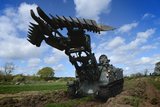
Cobham has announced that it has been awarded a number of orders over the past months to supply unnamed European customers with hand-held Improvised Explosive Device (IED) detection equipment incorporating its Ground-Penetrating Radar (GPR) systems. The company made the announcement 15 August 2012.
The company said the orders, totaling more than £13.8 million, were received during the second quarter of 2012. These orders will be delivered during the second half of 2012 from the Cobham Antenna Systems site in Leatherhead, UK.
Fred Cahill, VP Cobham Antenna Systems, commented: ‘Hand-held detectors incorporating our GPR systems protect lives and deliver enhanced Counter-IED capabilities for the most demanding military requirements.’
Top attacks have proven effective against heavily armoured vehicles in Ukraine. A new family of uncrewed aerial system-delivered munitions is looking to press that advantage further.
The Israeli company hopes that producing its Sigma artillery system wholly in the US will help it win a key US Army contract, but it will be up against the popular CAESAR Mk II wheeled weapon and the K9 tracked.
Germany has ordered 84 RCH 155 self-propelled guns, as system incorporating Boxer 8×8 vehicles and the Artillery Gun Module, and 200 Puma Infantry Fighting Vehicles while the UK has committed to a single Early Capability Demonstrator RCH 155.
While integration of guided weapons on modern armoured vehicles usually takes the form of a podded launcher on the turret exterior, recent developments suggest the concept of firing missiles from a tank’s main gun could be seeing a revival.
The order is a further boost for the Common Armoured Vehicles System programme which has notched notable successes in the past 12 months. The first vehicle, made in Finland, will be delivered next year with local production expected to ramp up in 2027.
The French and German governments signed an agreement in June 2018 to cooperate on the development of a new main battle tank under the Main Ground Combat System programme but the effort has struggled. This new agreement may damage it further.