


FNSS advances Indonesian Kaplan APC programme as local production expands
FNSS and PT Pindad are progressing the Indonesian tracked armoured personnel carrier programme as local production gets under way.


Avon Protection has been awarded a $42 million contract by the US Department of Defense (DoD) for the supply of 166,623 M50 chemical, biological, radiological and nuclear (CBRN) respiratory protection mask systems, it was announced on 10 March.
The M50 is designed to meet the latest NATO forces military mask requirements. It has a twin filter conformal system and a wide panoramic flexible visor. It has been developed to counter the multiple CBRN threats encountered in modern warfare, anti-terrorist and peace-keeping operations.
Gary Dunn, vice president, business development, Avon Protection, said: ‘We are proud that the US DoD continues to choose Avon to provide the best CBRN protective equipment for their troops. The M50 mask system delivers state-of-the-art protection against the changing threat environment we now have - from battlefield concentrations of CB agents, through to toxic industrial materials, toxic chemicals and particulate matter.
‘The streamlined design offers a high degree of flexibility and comfort for extended use. The unique twin low-profile filters reduce breathing resistance and improve weapon sighting and weight distribution, all of which enable the troops to perform optimally in their roles.’

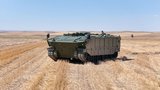
FNSS and PT Pindad are progressing the Indonesian tracked armoured personnel carrier programme as local production gets under way.
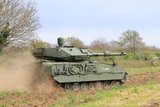
Firing trials of the Tulpar and Leonardo Hitfact Mk II combination follow an integration programme covering mechanical, electrical, electronic and software interfaces.
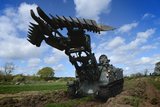
The news from Ukraine has again shown that antitank minefields and other obstacles on the battlefield, such as deep trenches, can play a key role in both offensive and defensive operations. Given this, there will always be a need to clear them, both during and after a conflict.
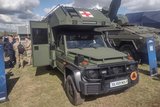
The UK Ministry of Defence has avoided being prescriptive in its search to replace the British Army’s Land Rover, meaning vehicle types being offered range from Land Rover Defender Wolf II and Humvee to the hybrid series Fering Pioneer. What does this mean for the procurement process?

The introduction of Ajax vehicles into British Army service was stopped after operator health issues were reported during an exercise, but manufacturer General Dynamics Land Systems UK believes work over the past 10 months has dealt with the problems.

Sweden, Croatia and France are pursuing different rocket artillery solutions as European armies seek greater reach, survivability and industrial resilience.

Connect with us on socials


