


New uses for proven weapons: adapting the Chain Gun for CUAS
Northrop Grumman’s M230LF Chain Gun is finding a growing role in countering uncrewed aerial systems, with the 30mm weapon already deployed to Ukraine and adopted by US forces.


Australia’s Minister for Defence Materiel Jason Clare announced on 30 January that the final of three Counter Rocket Artillery and Mortar (C-RAM) Giraffe radars had been delivered to Australia.
Teh Australian Army already has two radar systems currently deployed in Tarin Kot, Afghanistan and this third system will be used to train troops ahead of their deployment to the country.
‘The Giraffe radars provide our troops with early detection of attacks from enemy rockets, artillery and mortars, protecting Australian and ISAF forces,’ stated Clare. ‘This early warning system has proven to be an important force protection capability for our troops, giving them vital seconds of advanced warning so they can take shelter. The addition of a third Giraffe radar to train our soldiers before they deploy means they will be trained to use the full range of the radar’s capabilities from the time they hit the ground.’
Australia assumed responsibility for early detection against rocket, artillery and mortar attacks at Tarin Kot from 28 December 2010. The new Giraffe radars have replaced leased radars and were manufactured in Sweden by Saab under an A$86.2 million contract, which includes support services.
According to the Australian Department of Defence the new radars are the latest in a range of force protection initiatives that over the past few years has delivered A$1 billion in equipment to protect troops in Afghanistan including: up-armouring the Bushmaster patrol vehicle; new combat body armour; heavier calibre support weapons; and new ground-penetrating radar trucks to clear roads of IEDs before troops travel on them.

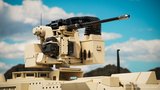
Northrop Grumman’s M230LF Chain Gun is finding a growing role in countering uncrewed aerial systems, with the 30mm weapon already deployed to Ukraine and adopted by US forces.
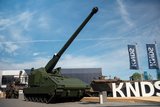
KNDS Deutschland has fitted a tracked RCH 155 with a new KNDS France 155mm/58cal ordnance, opening a potential path towards significantly longer-range artillery and a future beyond the current NATO standard.

It is believed that three companies did not make the downselect but a dark horse in Spain’s Iturri is believed to have got through.
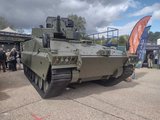
Air defence and counter-drone weapons continue to be developed, tested and demonstrated in anticipation of growing demand, with most solutions designed to be platform-agnostic and readily integrated onto suitable platforms.
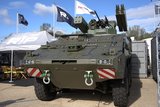
The US Army began its search for a 155mm tracked mobile tactical cannon in an effort that Shephard forecasts could be worth billions of dollars. Meanwhile, the UK DVD exhibition saw companies showcase their offerings for the British Army’s mobility and air defence requirements.
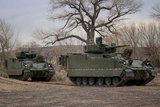
The development demonstrates how the platform could provide additional firepower and growth potential while the US Army progresses its long-term replacement for the Bradley.

Connect with us on socials


