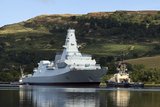
US Navy pleased with industry input on Large Surface Combatant


The US Navy, which released two RfIs for its future Large Surface Combatant (LSC) in February 2019, has received responses from more than 30 potential industry partners, according to an official at Naval Sea Systems Command (NAVSEA).
The navy is ‘definitely pleased with the level of response,’ which will help it develop requirements for the LSC, said Lisa Radocha, executive director for combatants in NAVSEA’s Program Executive Office for Ships. One RfI focused on the platform, while the other addressed the ship’s systems.
The RfIs outlined several features the navy is exploring, including a combat system that will ‘leverage’ the
Already have an account? Log in
Want to keep reading this article?

You may also like

More from Naval Warfare
-
![Hanwha Ocean and TKMS are firming up their Canadian next-gen submarine proposals]()
Hanwha Ocean and TKMS are firming up their Canadian next-gen submarine proposals
CPSP competitors are proposing platforms fitted with advanced, next-generation capabilities to be built and sustained in cooperation with the Canadian industry.
-
![UK’s $1 billion AUKUS support request signals strong ongoing US collaboration]()
UK’s $1 billion AUKUS support request signals strong ongoing US collaboration
The latest foreign military sales request from the UK has implications for the future of the programme and collaboration between the three nations.
-
![US Coast Guard prepares acquisition process of up to seven light icebreakers]()
US Coast Guard prepares acquisition process of up to seven light icebreakers
The USCG plans to award a contract this year for the construction of Homeland Security Cutters. The new vessels will replace the 60-plus-year-old fleet of Light Icebreaking Tugs.
-
![RTX Raytheon enhances SM-3 and SM-6 production capacity]()
RTX Raytheon enhances SM-3 and SM-6 production capacity
The expansion of the Redstone facility in Alabama will enable Raytheon to increase production of Standard Missiles in the location by 50% and support Washington in refilling stockpiles after recent operations have depleted the Pentagon’s reserves.
-
![What the rise of interoperability between Western allies means for defence procurement]()
What the rise of interoperability between Western allies means for defence procurement
Major naval initiatives including the European Patrol Corvette programmes and Norway’s UK partnership-focused purchase of Type 26 frigates point to the growing interest in the advantages of commonality across allied navies.