US coastal patrol ships test Griffin missiles


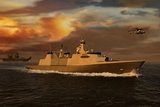
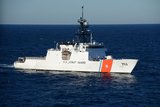
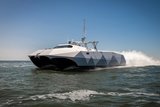
US Navy coastal patrol ships assigned to Patrol Coastal Squadron (PCRON) One have carried out proficiency fire testing of their MK 60 Griffin Missile Systems (GMS) from July 18-20 in the Arabian Gulf.
Five coastal patrol ships - USS Tempest, USS Squall, USS Chinook, USS Firebolt and USS Thunderbolt - launched surface-to-surface Griffin missiles at moving target sleds to demonstrate their ability to hit surface targets, such as small boats.
At sea testing for the GMS began in March 2012, with the GMS programme declared operational following live-fire tests on PCRON One's ships in March 2014. The GMS has since been rolled out over PCRON One's ten vessels.
The inclusion of the GMS to the coastal patrol ship's arsenal provides a greater depth of capability to counter threats.
The participating ships are five of the ten patrol ships forward deployed to Manama, Bahrain, assigned to Task Force 55, which is responsible for all surface forces in the US 5th Fleet area of operations, to include US Navy coastal patrol ships and US Coast Guard cutters.


More from Naval Warfare
-
![As Indonesia doubles up its order, who else is looking at the Arrowhead 140 frigate design?]()
As Indonesia doubles up its order, who else is looking at the Arrowhead 140 frigate design?
The adaptable design of Babcock’s Arrowhead 140 frigate, already selected by the UK Royal Navy and Poland, has led to more orders from Indonesia while other countries continue to weigh it up.
-
![How far will the US Navy’s FF(X) design deviate from the Legend-class?]()
How far will the US Navy’s FF(X) design deviate from the Legend-class?
The new frigate class’s focus on modularity, speed to build and enhanced armament align with the priorities of the US Navy’s Golden Fleet.
-
![How China’s naval advancements are pushing the US Navy to innovate]()
How China’s naval advancements are pushing the US Navy to innovate
The US Navy is set to invest $30 billion in artificial intelligence, cyber, space and autonomy research and development efforts in FY2026 as the force rethinks how it fights in light of China’s naval rise.