


What capabilities are being tested under AUKUS Pillar II?
Collaboration on AUKUS Pillar II extends beyond the core trilateral agreement, presenting global opportunities for companies with advanced technologies.


The US Navy and the Missile Defense Agency (MDA) have successfully completed the second intercept flight test of Raytheon's Standard Missile-3 (SM-3) Block IIA.
The missile was launched from USS John Finn against a land-launched target resembling an advanced ballistic missile threat.
The next-generation SM-3 Block IIA interceptor is being developed and produced in cooperation with Japanese industry and will be deployable on land as well as at sea. It features larger rocket motors that will allow it to defend broader areas from ballistic missile threats and a larger kinetic warhead. The interceptor’s kinetic warhead has been enhanced, improving search, discrimination, acquisition and tracking functions
Taylor Lawrence, president, Raytheon Missile Systems, said: ‘This second intercept for the SM-3 Block IIA is a success we share with the MDA and the country of Japan, our cooperative development partners. Together, we are building the most advanced solutions for ballistic missile defence.’

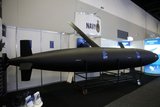
Collaboration on AUKUS Pillar II extends beyond the core trilateral agreement, presenting global opportunities for companies with advanced technologies.
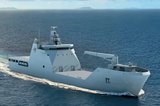
The A$4 billion Landing Craft Heavy contract for Austal follows on from a A$1 billion deal in December for Landing Craft Medium ships, but the Australian government has made it clear that a contract for Mogami frigates is reliant on the success of these two contracts.
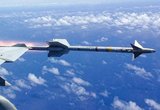
As part of the Runway Independent Maritime & Expeditionary Strike programme, the US Navy is pursuing drones capable of delivering palletised rounds or 1,000lb-class munitions.
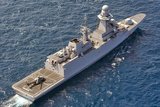
Havelsan, VN Maritime and Piloda Defence will collaborate to develop and integrate a range of maritime solutions with a view to secure a first procurement contract in Italy in the first half of this year.
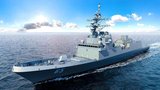
Export campaigns for Fincantieri’s submarines and frigates are central to the company’s ambitions as billions of dollars in unawarded contracts come into focus.

The USCG recently announced the award of a contract to Davie Defense for the supply of five ASCs, marking a major step in the acquisition programme as the US grows its presence in the Arctic.

Connect with us on socials


