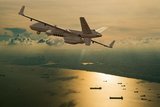
LRASM MK 41 VLS testing successfully completed


A simulated Long Range Anti-Ship Missile (LRASM) has sucessfully undergone MK 41 Vertical Launch System (VLS) ‘push-through’ testing, Lockheed Martin reported on 3 June. The testing is part of the company’s shipboard integration effort to prove LRASM can successfully function as an Offensive Anti-Surface Warfare (OASuW) weapon.
The four consecutive tests verified that the LRASM can break through the MK 41 canister’s forward cover without causing damage to the composite structure, air data probe or coatings of the missile. This form of testing is an important risk reduction milestone in the programme to demonstrate the missile’s surface launch capabilities.
LRASM is an autonomous, precision-guided anti-ship standoff missile being designed tomeet the needs of the US Navy and Air Force. The development of the missile builds on the successful Joint Air-to-Surface Standoff Missile Extended Range (JASSM-ER). The missile is in development by Lockheed Martin with the Defense Advanced Research Projects Agency (DARPA) and the Office of Naval Research.
LRASM cruises autonomously, day or night, in all weather conditions, armed with a proven penetrator and blast-fragmentation warhead. The missile employs a multi-modal sensor, weapon data link and an enhanced digital anti-jam Global Positioning System to detect and destroy specific targets within a group of ships. Both surface-launched and air-launched variants are planned to prosecute sea-based targets at significant standoff ranges.
Scott Callaway, LRASM surface launch program manager, Lockheed Martin Missiles and Fire Control, said: ‘These test results verified that the LRASM vehicle can break through the VLS cover without damage at realistic flight speeds. Lockheed Martin is investing in the shipboard integration of LRASM and we are confident it will meet all the requirements for the US Navy.’
Later this year a Boosted Test Vehicle (BTV) version of LRASM will be launched from a MK 41 VLS platform, which will be followed by two government-funded Controlled Test Vehicle flights in 2014.

You may also like

More from Naval Warfare
-
![Suppliers await next step in Australia’s mine warfare transition]()
Suppliers await next step in Australia’s mine warfare transition
Australia’s mine countermeasure capability remains in flux as the Huon-class nears retirement, but accelerated investment in autonomous systems is opening a path for industry.
-
![Can the US Navy ask Indo-Pacific allies to do more while training with them less?]()
Can the US Navy ask Indo-Pacific allies to do more while training with them less?
As the Iran War draws US ships and marine corps units away from the Indo-Pacific, curtailed exercises and a temporary carrier gap are exposing tensions between Washington’s demand for more self-reliant allies and the joint training needed to realise that ambition.
-
![How could Rheinmetall’s GMF 140 fit with ongoing programmes in North America?]()
How could Rheinmetall’s GMF 140 fit with ongoing programmes in North America?
With Canada committed to its River-class replacement and the USN pursuing a lower-cost frigate, Rheinmetall will need to demonstrate where the GMF 140 can fill a capability gap in the North American fleet.
-
![Australian industry programme builds pipeline for Virginia-class sustainment]()
Australian industry programme builds pipeline for Virginia-class sustainment
Australian businesses can now bid to support Virginia-class submarine sustainment in Western Australia, as momentum around the Henderson Defence Precinct also builds.
-
![South Korea, Japan and Turkey vie for US shipbuilding access in future frigate contest]()
South Korea, Japan and Turkey vie for US shipbuilding access in future frigate contest
Washington’s search for a foreign-built frigate could hand South Korea, Japan and Turkey a larger prize than a double-hull order: a foothold inside the US shipbuilding industrial base.
-
![Japan’s FY2027 budget bets on stand-off systems to offset demographic decline]()
Japan’s FY2027 budget bets on stand-off systems to offset demographic decline
Japan’s FY2027 defence budget backs stand-off strike, a 17-aircraft MQ-9B buy and a declared bid to lead the world in uncrewed maritime assets, alongside new frigates, submarines and support ships.