Italy’s Cavour carrier enters dock for F-35B integration work


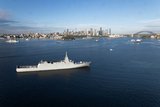
The Italian navy’s Cavour aircraft carrier has entered the Edgardo Ferrati drydock at Taranto to undergo maintenance and modernisation work to enable it to be integrated with the F-35B Joint Strike Fighter (JSF).
After ten years’ service with the navy, the Fincantieri-made vessel will be updated so that it is interoperable with Italy’s new fighter, which is due to replace the AV-8B Harrier that is currently operated by the navy’s carrier air group.
When Cavour entered the dock on 20 July, commander in chief of the navy fleet, Adm Donato Marzano, was present, the navy announced in August.
Displacing 27,000 tonnes, Cavour is the largest vessel to enter Edgardo Ferrati in some 70 years.
Manoeuvres to do so including the entry into the drydock to the positioning and emptying of the drydock lasted some 17h, and involved, in addition to the ship’s crew, the military and civilian personnel of the Naval Arsenal of Taranto.
Over the coming months, some of the more important technical modifications will be carried out on board the carrier, including the careening of the hull and the metallic reinforcement of the flight deck, necessary to limit the thermodynamic impact of the F-35B.
The overhaul work is expected to complete in the first half of 2020, after which the Cavour will go through a preparatory training period before setting sail to the US in the following months to conduct trials with the JSF on board.
These activities represent the first steps towards the carrier achieving initial operational capability with its new air group.
Related Equipment in Defence Insight


More from Naval Warfare
-
![How the Hormuz mine threat exposes potential Baltic MCM shortfalls]()
How the Hormuz mine threat exposes potential Baltic MCM shortfalls
Ageing Baltic vessels and an absence of active minehunting vessel programmes in the region have been put under the spotlight in the recent conflict.
-
![“We must end the mentality of ever larger platforms”: Why USVs are scaling]()
“We must end the mentality of ever larger platforms”: Why USVs are scaling
Multiple USV programme milestones announced last week, aligned with a reinforcement of the Royal Navy’s vision for a hybrid fleet, point to innovation-led ambition but also to a structural calculation with resource ceilings that neither London nor Washington can ignore.
-
![As uncrewed naval systems advance, capabilities to counter them are emerging]()
As uncrewed naval systems advance, capabilities to counter them are emerging
Research programmes and system procurement efforts to counter uncrewed surface and underwater vehicle threats are accelerating as naval drone uptake spreads.
-
![US Coast Guard to receive the first three Offshore Patrol Cutters in FY2026 and FY2027]()
US Coast Guard to receive the first three Offshore Patrol Cutters in FY2026 and FY2027
After recording a nearly six-year delay in the OPC schedule, the USCG intends to advance with the programme, reaching multiple milestones in the short term.