HMS Queen Elizabeth to begin F-35B trials


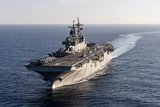
The Royal Navy’s aircraft carrier HMS Queen Elizabeth has departed for the US to carry out flight trials with F-35B fighter jets, the UK Ministry of Defence announced on 18 August.
The deployment, known as ‘WESTLANT 18’, will be the first-time HMS Queen Elizabeth will have sailed across the Atlantic.
During its trip to the US, the 65,000-tonne carrier will embark two F-35B test aircraft based out of Naval Air Station Patuxent River, Maryland, which are expected to carry out 500 take offs and landings during the carrier’s 11 weeks at sea.
The aim of these developmental trials is to ascertain the operating parameters of the aircraft and ship, in a range of conditions. Similar successful trials were conducted by HMS Queen Elizabeth at sea earlier in 2018 for rotary wing aircraft.
The trials follow the recent arrival into the UK of the first F-35B jets, based at RAF Marham. Operational testing usingBritish F-35B aircraft are scheduled to take place on board Queen Elizabeth in 2019.

You may also like

More from Naval Warfare
-
![Can the US Navy ask Indo-Pacific allies to do more while training with them less?]()
Can the US Navy ask Indo-Pacific allies to do more while training with them less?
As the Iran War draws US ships and marine corps units away from the Indo-Pacific, curtailed exercises and a temporary carrier gap are exposing tensions between Washington’s demand for more self-reliant allies and the joint training needed to realise that ambition.
-
![How could Rheinmetall’s GMF 140 fit with ongoing programmes in North America?]()
How could Rheinmetall’s GMF 140 fit with ongoing programmes in North America?
With Canada committed to its River-class replacement and the USN pursuing a lower-cost frigate, Rheinmetall will need to demonstrate where the GMF 140 can fill a capability gap in the North American fleet.
-
![Australian industry programme builds pipeline for Virginia-class sustainment]()
Australian industry programme builds pipeline for Virginia-class sustainment
Australian businesses can now bid to support Virginia-class submarine sustainment in Western Australia, as momentum around the Henderson Defence Precinct also builds.
-
![South Korea, Japan and Turkey vie for US shipbuilding access in future frigate contest]()
South Korea, Japan and Turkey vie for US shipbuilding access in future frigate contest
Washington’s search for a foreign-built frigate could hand South Korea, Japan and Turkey a larger prize than a double-hull order: a foothold inside the US shipbuilding industrial base.
-
![Russia’s uncrewed boat portfolio hints at future naval demand]()
Russia’s uncrewed boat portfolio hints at future naval demand
Ukrainian intelligence has catalogued more than 20 Russian uncrewed surface vessels, revealing a portfolio weighted towards mine warfare and logistics, with implications for Western naval investment.