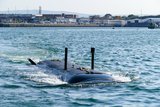
Ford-class integrated combat system tested
The integrated combat system for the USS Gerald R Ford has undergone final developmental testing off the coast of California.
Carried out by Raytheon and the US Navy, the test saw the navy’s unmanned self defence test ship simulating a range of real-life scenarios, including a raid scenario exercise. Two anti-ship missile surrogate targets were located, classified, tracked and engaged using the Ship Self Defense System (SSDS) integrated combat system adapted for CVN 78.
SSDS is an open, distributed combat management system in service on US carriers and amphibious ships. SSDS is integrated with Raytheon’s Cooperative Engagement Capability (CEC) for the extraction and distribution of sensor-derived information. This further enhances each ship’s anti-air warfare capability through sharing of available data to all participating CEC units, improving situational awareness, increasing range, and enabling cooperative, multiple, or layered engagement strategies.
The SSDS ICS for CVN 78 has now successfully engaged three of three targets over the course of its first two test exercises.
Related Equipment in Defence Insight




More from Naval Warfare
-
![Five years on: where could opportunities emerge next for AUKUS Pillar II?]()
Five years on: where could opportunities emerge next for AUKUS Pillar II?
Payload commonality, combat systems and electronic warfare are emerging as likely priorities as the trilateral partnership balances building submarines with sharing industrial ecosystems.
-
![Singapore expands maritime presence with future-ready Sentinel OPV]()
Singapore expands maritime presence with future-ready Sentinel OPV
Singapore is building space for uncrewed systems and future technologies into its new Sentinel-class OPVs, reflecting a wider move towards adaptable vessels capable of maintaining persistent maritime presence.
-
![From the Baltic to the Gulf: where USV procurement is heading next]()
From the Baltic to the Gulf: where USV procurement is heading next
Saildrone’s new Copenhagen base is one sign of a larger shift, as navies globally turn to uncrewed vessels for surveillance and mine clearance.
-
![Israeli Navy looks to expand as war reshapes future force requirements]()
Israeli Navy looks to expand as war reshapes future force requirements
Israel’s navy is preparing for a larger and more technically diverse role, but its ambitions could be impacted by supply chain restrictions, accelerating demand for domestic naval production as well as autonomous maritime capabilities.
-
![Quantum sensing gathers pace as navies eye undersea advantage]()
Quantum sensing gathers pace as navies eye undersea advantage
As AI dominates defence conversations, industry increasingly points to quantum sensing as the technology set to change submarine and uncrewed underwater vehicle operations.