First Saudi combat vessel build begins


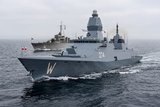
Fincantieri Marinette Marine has commenced construction of the Royal Saudi Navy’s first Multi-Mission Surface Combatant (MMSC) ship.
Being delivered by Lockheed Martin as prime contractor, the four MMSCs were ordered in 2017 under a foreign military sales (FMS) agreement.
The FMS package request also included equipment to arm the vessels, including combat management systems with five TRS-4D radars. Also included were eight MK-41 Vertical Launch Systems and 532 tactical RIM-162 Evolved Sea Sparrow Missiles.
Saudi Arabia also requested five AN/SWG-l (V) Harpoon ship command launch control systems; eight Harpoon Shipboard Launchers; 48 RGM-84 Harpoon Block II Missiles; five MK-15 Mod 31 SeaRAM Close-In Weapon Systems; 188 RIM 116C Block II Rolling Airframe Missiles; five MK-75 76mm OTO Melara gun systems; and 48 50-calibre machine guns.
Related Equipment in Defence Insight



More from Naval Warfare
-
![Canada assesses security equipment changes for Polar Icebreaker Imnaryuaq]()
Canada assesses security equipment changes for Polar Icebreaker Imnaryuaq
The Canadian Department of National Defence is evaluating communications and reconnaissance changes for CCGS Imnaryuaq’s expanded maritime security role, while retaining its 2032 acceptance target.
-
![All eyes on Royal Navy’s Type 93 market engagement as industry prepares bids]()
All eyes on Royal Navy’s Type 93 market engagement as industry prepares bids
Responses are due by 29 October as the Royal Navy tests the market, with BAE Systems’ Herne and MSubs’ Excalibur setting up a contest where payloads may decide the winner.
-
![US Navy’s MQ-25 Stingray approaches carrier-integration tests]()
US Navy’s MQ-25 Stingray approaches carrier-integration tests
Boeing has outlined its upcoming precision-landing and carrier-airspace trials as MQ-25 manufacturing shifts towards Illinois, with initial Lot 1 deliveries expected in 2029.
-
![From Poland to the Pacific: can Miecznik become a blueprint for other navies?]()
From Poland to the Pacific: can Miecznik become a blueprint for other navies?
Babcock is taking its Polish industrial partnership approach to Denmark and New Zealand as navies seek sovereign shipbuilding skills alongside ships.