


US Navy to acquire and test uncrewed surface vessel prototypes by the end of FY2026
The new autonomous surface vessels are planned to be operationally fielded in FY2027, following the completion of on-water trials.


China's sole aircraft carrier has led a flotilla of naval vessels in a ‘live combat drill’ in the East China Sea, the latest show of force by Beijing's burgeoning navy.
The vessels ‘took part in anti-aircraft and anti-submarine warfare training’ with a simulated ‘opposing force.’
The drill, which took place on 22 April, included multiple take-offs from the deck of the Liaoning aircraft carrier by J-15 fighter jets and that ‘anti-air missiles were fired from ships surrounding the carrier’.
The manoeuvre occurred in the East China Sea, though the report did not give an exact location.
The sea is home to uninhabited islets at the centre of a festering row between Tokyo and Beijing. The Japanese government has long complained about China's routine dispatch of coast guard ships to waters surrounding the islands.
The presence of a naval convoy carrying out live fire drills in the East China Sea could anger Tokyo.
The Liaoning is a refurbished cold war-era aircraft carrier that was bought from Ukraine and commissioned in 2012. It has been on a high-visibility tour in recent weeks, carrying out a series of muscle-flexing drills accompanied by a flotilla of support ships, including destroyers.
Earlier in April, Chinese President Xi Jinping inspected the convoy as it conducted exercises in the disputed South China Sea.
Beijing asserts sovereignty over almost the entire resource-rich waterway, building an archipelago of artificial islands there capable of hosting military equipment, despite rival claims from several of its Southeast Asian neighbours.
The flotilla then held two separate drills in the week ended 20 April in waters on either side of Taiwan, infuriating the government in Taipei.
China sees democratically-governed Taiwan as a renegade part of its territory to be brought back into the fold and has not ruled out reunification by force.
The Liaoning is the pride of China's rapidly expanding navy, with Beijing determined to become a major global naval power, particularly in the Pacific.
China's first home-made carrier started moving from its berth on 23 April as it prepares for its first sea trial, while a third, more advanced model is under construction in a Shanghai shipyard.
China's chief Pacific rival the US currently boasts 11 operating aircraft carriers and two more currently under construction.

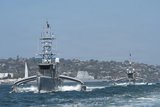
The new autonomous surface vessels are planned to be operationally fielded in FY2027, following the completion of on-water trials.
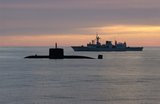
CPSP competitors are proposing platforms fitted with advanced, next-generation capabilities to be built and sustained in cooperation with the Canadian industry.
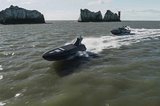
While their multibillion-dollar nuclear submarine ambitions move forward at a glacial industrial pace, all three countries are making a swifter bet: fleets of uncrewed vessels that can be built, deployed and iterated in years rather than decades.

The latest foreign military sales request from the UK has implications for the future of the programme and collaboration between the three nations.
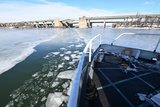
The USCG plans to award a contract this year for the construction of Homeland Security Cutters. The new vessels will replace the 60-plus-year-old fleet of Light Icebreaking Tugs.
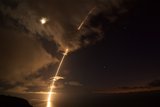
The expansion of the Redstone facility in Alabama will enable Raytheon to increase production of Standard Missiles in the location by 50% and support Washington in refilling stockpiles after recent operations have depleted the Pentagon’s reserves.

Connect with us on socials


