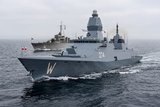
Third OPV build underway


BAE Systems has started construction of the third River Class Batch 2 Offshore Patrol Vessel (OPV) for the Royal Navy, it was announced on 7 October.
The vessel is being built at BAE Systems’ shipyards on the Clyde as part of a £348 million contract to build three OPVs for the navy.
Construction of first of class HMS Forth started in October 2014 while the construction of the second OPV HMS Medway began in June.
The first vessel is expected to be delivered to the navy in 2017. These ships can be deployed globally and will be capable of ocean patrol with a range of in excess of 5,000 nautical miles and a maximum speed of 24 knots.
The ship will be the first to be designed using BAE System’s Shared Infrastructure operating system, which is to be rolled out across the navy’s surface fleet over the next 10 years. The hardware solution provides a smart, easily-updatable operating system for warships enabling all the systems needed to operate a ship to be loaded onto a single console.
Philip Dunne, UK Defence Minister, said: ‘These new ships will provide an important capability to the Royal Navy and our armed forces. They will perform vital tasks in defending the nation’s interests around the world. This investment forms part of over £160 billion in our 10 year Equipment Plan which is funded out of the newly protected defence budget.
‘Manufacture of these ships sustains over 800 quality engineering jobs here in Scotland, ensuring that the shipyards on the Clyde continue to sit at the heart of a thriving naval shipbuilding capability. They are paving the way for work to begin on our new T26 frigates next year.’


More from Naval Warfare
-
![Canada assesses security equipment changes for Polar Icebreaker Imnaryuaq]()
Canada assesses security equipment changes for Polar Icebreaker Imnaryuaq
The Canadian Department of National Defence is evaluating communications and reconnaissance changes for CCGS Imnaryuaq’s expanded maritime security role, while retaining its 2032 acceptance target.
-
![US Navy’s MQ-25 Stingray approaches carrier-integration tests]()
US Navy’s MQ-25 Stingray approaches carrier-integration tests
Boeing has outlined its upcoming precision-landing and carrier-airspace trials as MQ-25 manufacturing shifts towards Illinois, with initial Lot 1 deliveries expected in 2029.
-
![From Poland to the Pacific: can Miecznik become a blueprint for other navies?]()
From Poland to the Pacific: can Miecznik become a blueprint for other navies?
Babcock is taking its Polish industrial partnership approach to Denmark and New Zealand as navies seek sovereign shipbuilding skills alongside ships.
-
![Unsettled waters in the North: can navies still trust their Arctic acoustic maps?]()
Unsettled waters in the North: can navies still trust their Arctic acoustic maps?
The changing Arctic environment is creating new challenges for submarine detection, driving demand for distributed sensors, uncrewed underwater vehicles and real-time acoustic modelling.