Malaysia publishes its first White Paper


Malaysia’s parliament passed the country’s first ever Defence White Paper on 2 December to guide defence planning and development from 2020-30. Amidst opposition criticism on the shortcomings of its contents, Defence Minister Mohamad Sabu tabled the paper with most of the cabinet, including the prime minister and finance minister, absent.
The White Paper’s procurement content overlooks or contradicts some current developments, such as calling for 155mm self-propelled howitzers even while the government is cancelling acquisition of 29 Excess Defense Article M109A5s signed for in 2018.
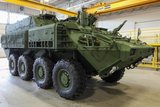
The Malaysian Army also requires new 105mm howitzers, a new armoured vehicle to replace aging
Our news & analysis is now part of Defence Insight®
A Basic-level or higher Defence Insight subscription is now required to view this content.

You may also like
More from Defence Notes
-
![US speeds up B61-13 nuclear bomb production as programme moves further ahead of schedule]()
US speeds up B61-13 nuclear bomb production as programme moves further ahead of schedule
The US government plans to accelerate production even further after achieving key B61-13 milestones months ahead of schedule, as the programme advances amid growing US-China strategic competition.
-
![New UK armed forces minister frames High North defence as vital to “homeland security”]()
New UK armed forces minister frames High North defence as vital to “homeland security”
The UK’s Minister for the Armed Forces Louise Sandher-Jones made her first appearance in the role before the House of Commons Defence Committee this week to highlight efforts to improve capability in the High North.
-
![Canada seeks to strengthen industrial ties with the US on classified programmes]()
Canada seeks to strengthen industrial ties with the US on classified programmes
Ottawa explores expanding defence-industrial cooperation with Washington into sensitive programmes, an approach that could reshape NORAD modernisation, strengthen North American supply chains and create new opportunities for defence contractors.
-
![UK’s latest defence robotics and autonomy competition looks to break new ground]()
UK’s latest defence robotics and autonomy competition looks to break new ground
The UK Ministry of Defence is backing early-stage, high-risk autonomy concepts that could redefine how military systems are developed and deployed.
-
![How AI is reshaping defence procurement through sustainment]()
How AI is reshaping defence procurement through sustainment
Artificial intelligence is not just changing how defence equipment is maintained but how defence programmes are won, creating new opportunities for industry by influencing acquisition decisions and shaping competition.