Guyana engages Rosoboronexport for MTC
Russia’s Rosoboronexport and the political and military leadership of Guyana have concluded their talks on establishing and developing contacts in the area of military and technical cooperation (MTC), it was announced on 3 June.
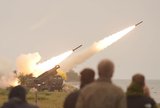
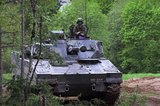
Presentations of Russian security systems and equipment were held for Guyana's law enforcement and defence representatives. Rosoboronexport has expressed interest in beginning bilateral cooperation with the Ministry of Public Security and Police and the armed forces, primarily in the implementation of 'advanced Russian-Made Security Systems project'.
Sergey Goreslavsky, deputy chief executive officer, Rosoboronexport, said: ‘During consultations held in October 2015 between the Foreign Ministries of the two countries, Guyana reaffirmed its keen interest in multi-faceted cooperation with the Russian Federation. It was agreed to develop a road map for the further development of bilateral ties in various fields of cooperation, including military-technical cooperation.’
Rosoboronexport also plans to participate in a national programme for upgrading and reequipping Guyana’s defence and law enforcement agencies as well as the implementation of the Safe City of Georgetown project, which is scheduled to be launched in 2017.



You may also like
More from Defence Notes
-
![Estonia opts for smart, adaptable and cooperative solutions in the face of Russian threat]()
Estonia opts for smart, adaptable and cooperative solutions in the face of Russian threat
Estonian-made equipment is being put through the toughest of evaluations in the hands of Ukrainian soldiers resisting the full-scale Russian invasion which began in 2022. The country has long seen the threat and is continuing to adapt for the future.
-
![Estonia boosting defence industry with lessons from Ukraine, says country’s economic minister]()
Estonia boosting defence industry with lessons from Ukraine, says country’s economic minister
Estonia is looking to boost its local defence industry with directed funding, industry parks, support through international orders for equipment and rapid prototyping.
-
![UK faces cost of balancing defensive capabilities abroad as Iran conflict widens]()
UK faces cost of balancing defensive capabilities abroad as Iran conflict widens
The UK has recently deployed a Type 45 destroyer to Cyprus and has bolstered its presence in the Middle East in recent weeks with supporting air power to protect neighbouring countries’ air defences.
-
![White House calls on Pentagon contractors to “rapidly and aggressively” boost weapon production]()
White House calls on Pentagon contractors to “rapidly and aggressively” boost weapon production
Intended to sustain Operation Epic Fury against Iran, efforts to increase the production of weapons and ammunition could expose long-standing weaknesses in the US defence industrial base.
-
![India’s strategic defence footprint expansion could be accelerated by Iran-Israel conflict]()
India’s strategic defence footprint expansion could be accelerated by Iran-Israel conflict
The latest escalation between Iran and Israel could shape New Delhi’s next-generation shield as India deepens cooperation with Israel on missile defence and drone production.
-
![Is the US magazine of air defence interceptors deep enough to sustain a long campaign against Iran?]()
Is the US magazine of air defence interceptors deep enough to sustain a long campaign against Iran?
The Pentagon spent a considerable number of THAAD and SM-3 rounds to defend against Iranian missiles in 2025 and has not fully replenished its reserves.