Despite rows, EU-US defence ties still strong
NATO Secretary General Jens Stoltenberg on 21 June acknowledged the ‘real’ disagreements between Europe and the US but insisted the trans-Atlantic bond on defence and security remained strong.
He said he was ‘absolutely confident’ that the US-led military alliance would be able to demonstrate its unity at a summit in July 2018, promising ‘more cash and capabilities’.
Stoltenberg said in a speech in London: ‘These disagreements are real. It is not written in stone that the transatlantic bond will survive forever. But I believe we will preserve it.’
He noted different views between European nations and US President Donald Trump on the Iran nuclear deal, the environment and trade, which exploded at an acrimonious G7 meeting earlier in June 2018.
Stoltenberg said: ‘There are many different ties that bind Europe and North America together. We may have seen the weakening of some of them lately. But our ties on defence have grown stronger.
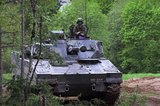
‘Since coming to office, the Trump administration has increased funding for the US presence in Europe by 40%. The last US Main Battle Tank left Europe in 2013. But now they're back. With a whole new armoured brigade.’
He added that faced with international terrorism, the proliferation of weapons of mass destruction, cyberattacks on ‘a more assertive Russia’, North America and Europe must stand together.
He said: ‘It is – and has always been – in our fundamental interest to stand together.’



More from Defence Notes
-
![Estonia opts for smart, adaptable and cooperative solutions in the face of Russian threat]()
Estonia opts for smart, adaptable and cooperative solutions in the face of Russian threat
Estonian-made equipment is being put through the toughest of evaluations in the hands of Ukrainian soldiers resisting the full-scale Russian invasion which began in 2022. The country has long seen the threat and is continuing to adapt for the future.
-
![UK faces cost of balancing defensive capabilities abroad as Iran conflict widens]()
UK faces cost of balancing defensive capabilities abroad as Iran conflict widens
The UK has recently deployed a Type 45 destroyer to Cyprus and has bolstered its presence in the Middle East in recent weeks with supporting air power to protect neighbouring countries’ air defences.
-
![White House calls on Pentagon contractors to “rapidly and aggressively” boost weapon production]()
White House calls on Pentagon contractors to “rapidly and aggressively” boost weapon production
Intended to sustain Operation Epic Fury against Iran, efforts to increase the production of weapons and ammunition could expose long-standing weaknesses in the US defence industrial base.
-
![India’s strategic defence footprint expansion could be accelerated by Iran-Israel conflict]()
India’s strategic defence footprint expansion could be accelerated by Iran-Israel conflict
The latest escalation between Iran and Israel could shape New Delhi’s next-generation shield as India deepens cooperation with Israel on missile defence and drone production.
-
![Is the US magazine of air defence interceptors deep enough to sustain a long campaign against Iran?]()
Is the US magazine of air defence interceptors deep enough to sustain a long campaign against Iran?
The Pentagon spent a considerable number of THAAD and SM-3 rounds to defend against Iranian missiles in 2025 and has not fully replenished its reserves.