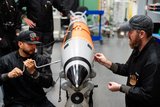
NATO experiments with solutions to integrate networks, AI and uncrewed systems
During the latest edition of the NATO DiBaX, the alliance tested multiple capabilities to inform requirements for future efforts.
Pinnacle Airlines Corporation has released capacity and operational results for its Colgan Air subsidiary for February 2010.
Revenue passenger miles (RPMs) showed a small drop of 1.2% to 38,135,000 from 38,604,000 in February 2009, while capacity, in available seat miles (ASMs) was cut by 12.2% to 69,751,000 from 79,450,000. This led to a 6.1 percentage point increase in load factor, with February 2010’s figure being 54.7% compared with last February’s 48.6%.
Colgan carried a total of 162,058 passengers during the month, a 5.9% decrease from the 172,242 carried in the same period last year.
The fleet of 34 Saab 340s and 14 Bombardier Q400s – the same as in February last year – flew 8,902 block hours, 15.0% down on the 10,479 hours In February 2009.
During the latest edition of the NATO DiBaX, the alliance tested multiple capabilities to inform requirements for future efforts.
The new multi-layered defence system will harness AI to neutralise airborne threats and protect Europe from Russian aggression.
Future US counter-uncrewed aerial system solutions are likely to require a flexible, multi-layered approach to tackle a broad spectrum of new threats as they emerge.
The company’s order backlog as of 30 September totalled $25.2 billion and more than a third of this is scheduled to be fulfilled before the end of 2026.
Advanced manufacturing has evolved to meet military requirements and now supports multiple US critical assets, including Arleigh Burke-class destroyers, F-18, F-22, F-35, Bradley, HMMWV and Patriot.
The Irish Naval Service has struggled to maintain capability, particularly in the face of lucrative private sector offers luring away personnel.