


From systems integrator to multi-domain solutions provider (video)
Philipp von Brandenstein, Head of Corporate Communications at Rheinmetall, explains how Eurosatory 2026 marked a new stage in the company's evolution.


Air Arabia has reported its financial results for the 12 months ending 31 December 2009, again turning in a net profit.
The net profit for the 12 months ending 31 December 2009 was AED 452 million, sustaining 2008’s performance of AED 454 million (excluding exceptional items). For the full-year 2009, the company registered a turnover of AED 2 billion, a 4.5% decrease from the AED 2.066 billion recorded in 2008.
The airline carried 4.1 million passengers in 2009, an increase of 14.2% compared to the 3.6 million passengers served in 2008. In the 12 months ending 31 December 2009, Air Arabia’s average seat load factor stood at 80%.
Commenting on the company’s results, Sheikh Abdullah Bin Mohammad Al Thani, chairman of Air Arabia, remarked, “The previous 12 months represented one of the most challenging periods in the history of the global aviation sector, as pressure on yields increased significantly as a consequence of the worldwide financial crisis. The associated overcapacity in the sector led to collective losses of roughly $11 billion for all global airlines, demonstrating the depth of the challenges facing our industry.
“During that time of great instability, Air Arabia nevertheless continued to chart a path to profitability,” Sheikh Abdullah added, “and we are all very proud of [these] sustainable financial results. Based on the strength of our unique business model, efficiency of our operations and compelling value-for-money customer proposition, Air Arabia has been able to navigate the current challenges and invest in its long-term growth.
Air Arabia currently serves 59 destinations across the world from its hubs in Sharjah and Casablanca. Last year, Air Arabia announced the signing of a joint venture agreement with the Travco Group to launch a new low-fare carrier based in Egypt, serving the Europe, Middle East and Africa markets and representing the carrier’s third hub after the UAE and Morocco. Operations at the third hub in Egypt are expected to begin in the first half of 2010.


Philipp von Brandenstein, Head of Corporate Communications at Rheinmetall, explains how Eurosatory 2026 marked a new stage in the company's evolution.

The US Department of Defense has requested new contracting authorities from Congress, using the Army's MV-75 Cheyenne programme to demonstrate how competition, digital engineering and closer industry collaboration could accelerate acquisitions.
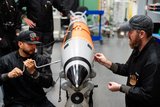
The US government plans to accelerate production even further after achieving key B61-13 milestones months ahead of schedule, as the programme advances amid growing US-China strategic competition.
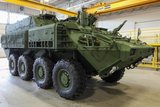
General Dynamics Land Systems-Canada is the country’s first strategic partner under the Defence Industrial Strategy’s Strategic Partnership Framework, an effort to provide companies with confidence to invest and boost the defence labour force.
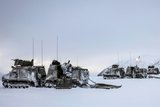
The UK’s Minister for the Armed Forces Louise Sandher-Jones made her first appearance in the role before the House of Commons Defence Committee this week to highlight efforts to improve capability in the High North.
Ottawa explores expanding defence-industrial cooperation with Washington into sensitive programmes, an approach that could reshape NORAD modernisation, strengthen North American supply chains and create new opportunities for defence contractors.

Connect with us on socials


