USAF awards contract to design SIGINT sensor
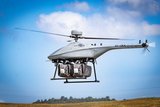
Northrop Grumman will design an open standards-based signals intelligence (SIGINT) sensor prototype for USAF. (Imagine: Northrop Grumman)
Northrop Grumman Corporation was awarded a contract to design a platform-agnostic sensor.


Northrop Grumman Corp. will design a prototype sensor, including airborne and ground components, with an innovative, open standards-based hardware and software architecture that can be scaled and configured to fly on multiple types of manned and unmanned Air Force aircraft.
This contract is part of the Air Force’s Global High-altitude Open-system Sensor Technology (GHOST) program and will provide USAF with a sensor for high-altitude intelligence, surveillance, and reconnaissance platforms.
The new sensor will also support rapid system enhancement, testing, accreditation and integration at the speed of relevance long into the future as the dynamic battlespace changes.
Vice president and general manager of Northrop Grumman, Ben Davies, said: ‘our platform-agnostic GHOST sensor is a next-generation intelligence data collection and exploitation system’.



More from Air Warfare
-
![V-22 Osprey safety upgrade moves towards wider fleet installation under $35.5 million deal]()
V-22 Osprey safety upgrade moves towards wider fleet installation under $35.5 million deal
Bell Boeing will supply 73 additional ODSSHI kits as NAVAIR prepares to introduce predictive drive-system monitoring across US and Japanese V-22 fleets.
-
![AFA 2026: US Air Force examines uncrewed cargo aircraft for contested logistics]()
AFA 2026: US Air Force examines uncrewed cargo aircraft for contested logistics
The US Air Force is evaluating demonstrators for uncrewed cargo missions as it considers logistics requirements across the Pacific and other contested environments.
-
![Germany air focus: Europe’s leading near-term air market targets domestic industry]()
Germany air focus: Europe’s leading near-term air market targets domestic industry
Between 2026 and 2032, almost a quarter of EU aircraft spending is expected to come from Germany. While crewed programmes seek modernisation and replacement, uncrewed opportunities look to introduce entirely new capabilities, with both highlighting sovereignty and domestic production.
-
![Europe risks losing control of CUAS production capacity as manufacturers look abroad]()
Europe risks losing control of CUAS production capacity as manufacturers look abroad
European counter-drone developers are securing early orders in the Middle East while slow domestic acquisition processes threaten to redirect production capacity, expertise and investment away from Europe.
-
![India’s rotary-wing capability gap grows as IMRH programme delays persist]()
India’s rotary-wing capability gap grows as IMRH programme delays persist
With IMRH and DBMRH potentially years from service, India faces a widening rotary-wing capability gap that could drive further foreign purchases even as HAL and Safran build the foundations of an indigenous successor.