Skunk Works reveals Vectis, a CCA for American and allied militaries
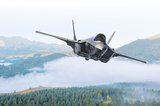
The Vectis has a highly capable, customisable and affordable agile drone framework, according to Skunk Works. (Photo: Lockheed Martin)
The configuration of the uncrewed aerial vehicle (UAV) is stealthy and affordable, with “advanced manufacturing and digital engineering techniques” contributing to reducing costs and achieving affordable combat mass, according to Lockheed Martin.


Lockheed Martin’s Skunk Works unveiled the Group 5 (MALE) UAV on 21 September 2025, pitching it as a survivable, stealthy, modular and lethal collaborative combat aircraft (CCA) for the US and the international market.
Lockheed describes the UAV as having a “customisable and affordable agile drone framework”, featuring open mission architectures, aligning with Government Reference Architecture.
In terms of being paired with crewed fighters, the system will integrate with fifth and next-gen aircraft. Lockheed stated the aircraft had MDCX and other common control systems. It will provide multi-domain connectivity, whether standalone or as part of integrated teaming missions with crewed
Our news & analysis is now part of Defence Insight®
A Basic-level or higher Defence Insight subscription is now required to view this content.


More from Air Warfare
-
![V-22 Osprey safety upgrade moves towards wider fleet installation under $35.5 million deal]()
V-22 Osprey safety upgrade moves towards wider fleet installation under $35.5 million deal
Bell Boeing will supply 73 additional ODSSHI kits as NAVAIR prepares to introduce predictive drive-system monitoring across US and Japanese V-22 fleets.
-
![India’s rotary-wing capability gap grows as IMRH programme delays persist]()
India’s rotary-wing capability gap grows as IMRH programme delays persist
With IMRH and DBMRH potentially years from service, India faces a widening rotary-wing capability gap that could drive further foreign purchases even as HAL and Safran build the foundations of an indigenous successor.
-
![AFA 2026: Swarm Aero eyes 2027 Gamera flight as Textron/Merlin reveal SkyCourier UX]()
AFA 2026: Swarm Aero eyes 2027 Gamera flight as Textron/Merlin reveal SkyCourier UX
Two new uncrewed aircraft concepts target very different US military requirements, from massed long-range strike to autonomous logistics. Shephard spoke with executives from Swarm Aero, Textron Aviation and Merlin Labs at this year's AFA Air, Space & Cyber conference to learn more about their capabilities.