Poland receives first batch of FA-50GF Fighting Eagle jets
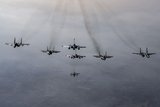
The introduction of the FA-50 into the Polish Air Force is expected to pave the way for the retirement of ageing Soviet-era MiG-29 and Su-22 aircraft. (Photo: KAI)
Poland’s acquisition of 48 FA-50 advanced trainer and light fighters from KAI has culminated in the formal display of a dozen FA-50 Block 10 jets by the Polish Air Force.


The Polish Air Force (PAF) officially showcased all twelve Korea Aerospace Industries (KAI) FA-50GF Fighting Eagles at the end of 2023.
The General Command of the PAF published a short video of the line-up ceremony on its X (formerly Twitter) page.
Poland’s Armament Agency (AA) signed two procurement contracts for 48 FA-50 advanced trainer and light fighters with Korea Aerospace Industries (KAI) in September 2022.
The first US$705 million deal covered the dozen FA-50 Block 10 jets – the same configuration as used by the Republic of Korea Air Force – that the Polish Air Force showed in its video.
Our news & analysis is now part of Defence Insight®
A Basic-level or higher Defence Insight subscription is now required to view this content.

More from Air Warfare
-
![UK eyes lightweight satellite communications for UAVs]()
UK eyes lightweight satellite communications for UAVs
The UK is seeking to extend the operational reach of uncrewed aerial vehicles, reflecting growing demand for compact, energy-efficient technology to support beyond-line-of-sight operations.
-
![The new generation of defence companies emerging from the US UAV boom]()
The new generation of defence companies emerging from the US UAV boom
As the Pentagon accelerates procurement of low-cost, lethal UAVs through its Drone Dominance Program, emerging suppliers will need to demonstrate manufacturing capacity, supply chain resilience and reliability.
-
![US Coast Guard faces key procurement decisions after C-130J and MQ-9B orders]()
US Coast Guard faces key procurement decisions after C-130J and MQ-9B orders
The service is updating several parts of its aviation fleet including fixed-wing and rotary-wing aircraft and procuring uncrewed aircraft to boost its maritime surveillance.