Gripen fighter jet software update move faster than competitors, says Saab
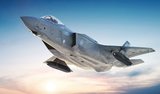
Saab said it did not believe in the “generational” talk which has dominated the discourse around fighter jet updates. (Photo: Norbert Neumann)
Saab has touted its rapid software update capabilities for the JAS 39 Gripen, claiming it could deliver updates “in days“ and challenging the generational focus of rivals such as Lockheed Martin.


Saab said that it did not measure software iterations and updates “in months or years, but in days” when it came to fighter jets, claiming it was confident its approach meant it could provide updates faster than rival manufacturers.
During a recent press visit in Linkoping, northern Sweden, company representatives offered updates on the continuous development of the JAS 39C/D Gripen models and the latest E/F versions. A Saab spokesperson said it believed that in fighter software “there are no generations, only speed”, throwing a rhetorical punch towards Lockheed Martin.
The Swedish defence company has been continually providing software updates to the Gripen C/Ds, said Johan
Our news & analysis is now part of Defence Insight®
A Basic-level or higher Defence Insight subscription is now required to view this content.




More from Air Warfare
-
![September crewed air review: established platforms retain their grip on the market]()
September crewed air review: established platforms retain their grip on the market
With many next-generation capabilities still years from operational readiness, several of the month’s largest developments demonstrated that governments remain willing to invest heavily in aircraft with proven capabilities and established support networks.
-
![Will the US Navy F/A-XX and the USAF F-47 compete for production capacities?]()
Will the US Navy F/A-XX and the USAF F-47 compete for production capacities?
The two sixth-generation fighter programmes could battle for engineering talent and production lines before deliveries begin, testing Boeing’s industrial expansion plans.
-
![September drone digest: attrition-tolerant aircraft pitched to replace the Reaper]()
September drone digest: attrition-tolerant aircraft pitched to replace the Reaper
The loss of many MQ-9 Reapers during the 2026 Iran War has underscored the risks of sending relatively expensive UAVs into contested airspace. In September, new contenders to replace the Reaper emerged, championing cheaper, modular aircraft designs for mass production and inevitable attrition.