F/A-18 Super Hornets arrive in Finland for HX Challenge


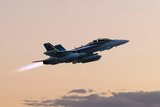
Two Boeing F/A-18 Super Hornets and an EA-18G Growler have arrived in Finland to begin flight trials as part of the country’s HX Challenge.
Boeing is offering a combination of its F/A-18 Block III Super Hornet and EA-18G Growler platforms for the HX competition, along with a sustainment and training programme.
The aircraft will undergo flight trials at Pirkkala Air Base near Tampere to demonstrate their capabilities in the Finnish operating environment.
The Block III Super Hornet configuration adds capability upgrades and includes a technology insertion plan to keep the aircraft ahead of emerging threats. The EA-18G Growler is based on the Super Hornet platform and shares over 90% of common components and systems.
Maria Laine, vice president of International Strategic Partnership for Boeing Defense, Space & Security, said: ‘The strong Boeing-Finland partnership started nearly 30 years ago when the first F/A-18s entered service with the Finnish Air Force.
‘We are confident that our current offering – a mix of Super Hornet Block IIIs and Growlers – is the right choice for the Finnish Air Force and Finnish industry and will support a mutually beneficial partnership for decades to come.’
Related Equipment in Defence Insight


More from Air Warfare
-
![AI-controlled F-16s advance towards autonomous multi-aircraft operations in US]()
AI-controlled F-16s advance towards autonomous multi-aircraft operations in US
The US plans to progressively expand VENOM/AIR testing from single-aircraft flights to multi-platform autonomous operations over the next 12–24 months, generating data that could support future US military AI programmes, including Collaborative Combat Aircraft.
-
![AIM-260 JATM deal puts Australia’s missile-industrial ambitions in focus]()
AIM-260 JATM deal puts Australia’s missile-industrial ambitions in focus
While a potentially accelerated acquisition timeline could strengthen the RAAF’s long-range air combat capability, Canberra’s continued reliance on US missile production is also put under the spotlight in parallel to its push to build a sovereign industry.
-
![Attack drones versus CUAS – the future of warfare or just another trend?]()
Attack drones versus CUAS – the future of warfare or just another trend?
Demand signals for counter-drone technology are strong and the market is becoming crowded, but is this really the beginning of a new phase of warfare or will commentators be talking about something else 10 years from now?