Australia invests extra A$1.4 billion in MQ-28A Ghost Bat after successful missile fire test
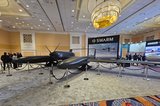
The MQ-28A Ghost Bat missile firing tests took place at the Woomera Range Complex. (Photo: Boeing Defence Australia)
The investment includes new contracts for six MQ-28A Ghost Bat aircraft, as well as provisional funds to invest in the development of a Block 3 prototype.


Australia has said it will invest A$1.4 billion (US$930 million) with Boeing Defence Australia to transition the MQ-28A Ghost Bat into a “fully operational war-fighting asset” for the Royal Australian Air Force (RAAF).
The investment includes contracts for six Block 2 MQ-28A Ghost Bat aircraft, as well as funding for the development of a Block 3 prototype.
The contract decision follows Boeing successfully completing its first missile fire test using an AIM-120 AMRAAM missile from the MQ-28A against a drone target.
According to Boeing, the mission involved teaming between the MQ-28A, E-7A and the F/A-18F Super Hornet, with the E-7A
Our news & analysis is now part of Defence Insight®
A Basic-level or higher Defence Insight subscription is now required to view this content.


More from Air Warfare
-
![India’s rotary-wing capability gap grows as IMRH programme delays persist]()
India’s rotary-wing capability gap grows as IMRH programme delays persist
With IMRH and DBMRH potentially years from service, India faces a widening rotary-wing capability gap that could drive further foreign purchases even as HAL and Safran build the foundations of an indigenous successor.
-
![US Navy moves EA-18G Growler Block II electronic-attack upgrade into full-rate production]()
US Navy moves EA-18G Growler Block II electronic-attack upgrade into full-rate production
A US$184.25 million contract for Next Generation Electronic Attack Units advances the Growler’s modernisation as the US Navy confronts ageing systems, parts shortages and obsolescence.
-
![Could the next UAS market boom take place beyond the battlefield?]()
Could the next UAS market boom take place beyond the battlefield?
While the headlines remain dominated by the use of drones for combat operations in Ukraine and other conflicts, there are emerging use cases where the technology could usefully feed back into areas and missions outside the war zone.