Air Warfare magazine: Sixth-generation fighters; MALE UAVs and more
Read the latest edition of Air Warfare for free in our app or on your desktop.


What’s inside this edition:
Comment: Russian roulette
The 2014 annexation of Crimea shocked the international community, and now, less than a decade later, all eyes are back on Ukraine as Russian forces surround the nation.
Features include:
Clouds on the horizon
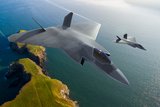
News of the Italian Air Force’s Chief of Staff going public with the idea that Tempest and FCAS will eventually merge has cast serious doubts over sixth-generation fighter development across Europe.
Double-edged drone
The increasing reliance on MALE UAVs demonstrates that air forces now consider these aircraft to be critical to operations. However, concerns still surround these platforms – will those on the front line have to rethink how and when to deploy them?
Moving market
After showcasing its value in the 2020 Nagorno-Karabakh conflict, the Bayraktar TB2 has been in high demand. Shephard Defence Insight analyses the platform’s recent market performance and highlights future opportunities.
Beyond AMRAAM
The rising use of UAVs and the emergence of future technologies such as stealth aircraft and hypersonic missiles translates to a more deadly air domain. It is imperative that equal attention is given to countering these threats.
Where are the helicopters, Asia?
The era of Western-built platforms dominating the international defence market is quickly declining. However, this trend has not yet been replicated in the rotary-wing market where Asian producers are struggling to find consumers for their products.
Bonus content coming soon.



More from Air Warfare
-
![USAF eyes sensor and weapon upgrades as MH-139A Grey Wolf achieves IOC]()
USAF eyes sensor and weapon upgrades as MH-139A Grey Wolf achieves IOC
The Grey Wolf has entered operational service nearly three years later than originally planned, while new sustainment contracts indicate that some UH-1Ns could remain supported until 2031.
-
![How geopolitics and new military alliances are disrupting combat aircraft procurement]()
How geopolitics and new military alliances are disrupting combat aircraft procurement
Selection of fighter aircraft by national governments has always been political. As markets and allegiances shift against a background of global realignment, who will be the winners and losers as new entrants compete with established suppliers?
-
![Singapore’s interest in GCAP reflects its long-term approach to air power]()
Singapore’s interest in GCAP reflects its long-term approach to air power
A potential interest in joining GCAP is indicative of Singapore’s long-term and methodical approach to defence procurement and could benefit its local defence industry.