Raytheon enhances UAS “see and avoid” picture
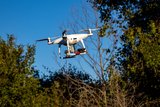
Raytheon Company has developed and patented a low-cost radar technology that will, for the first time, provide both military and civil air traffic controllers with the capability to avoid airborne hazards around unmanned aircraft systems (UAS), which costs the Pentagon millions in damaged aircraft.
Under the Ground Based Sense and Avoid (GBSAA) initiatives with the US Air Force to repurpose existing National Airspace System (NAS)-certified radars, UAS operators and controllers will have more information to help them make safer decisions. Since current ATC radars can only see airspace in two dimensions -- latitude and longitude -- UAS operators and controllers must assume that any hazard detected also resides on the same altitude.
“Traditional air traffic control radars have only been able to see in two dimensions since the 1950s,” said Mike Prout, vice president for Raytheon Network Centric Systems’ Security and Transportation Systems. “Our comprehensive technology provides one more dimension that gives UAS operators and controllers what they need to get the mission done.”
Currently UAS operators have to avoid any potential hazard in the airspace, even those that may be far from the UAS in altitude. With the ATC radars repurposed through a software enhancement to detect altitude, the install-base of ATC radars will be able to detect all hazards in the NAS and provide the altitude resolution information needed by controllers and UAS operators to safely and efficiently direct the UAS.
Source: Raytheon





More from Uncrewed Vehicles
-
![The shift away from Chinese drone technology presents supplier opportunities]()
The shift away from Chinese drone technology presents supplier opportunities
As countries increasingly move away from Chinese drone manufacturing and focus on domestic production and collaboration, Europe and the US are well-placed to step in – although cost remains a crucial consideration.
-
![What’s next for the Pentagon after the Replicator programme?]()
What’s next for the Pentagon after the Replicator programme?
Although the Replicator initiative has made several accomplishments, there are still multiple gaps to plug across the US Department of Defense (DoD) and its services.
-
![Cummings Aerospace showcases Hellhound loitering munition designed for US Army’s LASSO programme (video)]()
Cummings Aerospace showcases Hellhound loitering munition designed for US Army’s LASSO programme (video)
Cummings Aerospace presented its turbojet-powered Hellhound loitering munition at SOF Week 2025, offering a man-portable solution aligned with the US Army’s LASSO requirements.
-
![SOF Week 2025: PDW unveils attritable FPV drone for SOF operations at scale]()
SOF Week 2025: PDW unveils attritable FPV drone for SOF operations at scale
PDW has revealed its Attritable Multirotor First Person View drone at SOF Week 2025, offering special operations forces a low-cost, rapidly deployable platform for strike and ISR missions, inspired by battlefield lessons from Ukraine.
-
![SOF Week 2025: Teledyne FLIR white paper provides guidance on reusable loitering munitions]()
SOF Week 2025: Teledyne FLIR white paper provides guidance on reusable loitering munitions
Teledyne FLIR is highlighting the emerging requirements for 'recoverable and re-usable' loitering munitions across the contemporary operating environment during this week’s SOF Week conference in Tampa, Florida.
-
![SOF Week 2025: Kraken Technology group debuts K3 Scout USV in North America]()
SOF Week 2025: Kraken Technology group debuts K3 Scout USV in North America
High-performance maritime industry player Kraken Technology Group, based in the UK, has used the SOF Week conference in Tampa, Florida this week to debut its K3 Scout uncrewed surface vessel (USV) to the North American market.