What the rise of interoperability between Western allies means for defence procurement
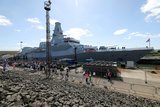
The UK will supply the Royal Norwegian Navy with at least five Type 26 anti-submarine frigate to create a combined 13-ship fleet for the two countries’ navies. (Photo: Crown Copyright)
Major naval initiatives including the European Patrol Corvette programmes and Norway’s UK partnership-focused purchase of Type 26 frigates point to the growing interest in the advantages of commonality across allied navies.


The commonality of design and systems appears be a growing trend across domains of the defence industry as we approach the latter years of the 2020s. Western nations are seeking increased collaboration and commonality with allies in the face of Russian aggression and an unreliable US.
This is particularly evident within Europe, specifically in the EU which has introduced generous funding programmes such as the Simple Agreement for Future Equity (SAFE) to encourage this cooperation inside the bloc.
SAFE has allocated €150 billion (US$177.18 billion) of funding to EU members for large-scale urgent procurement projects, with the caveat that the
Already have an account? Log in
Want to keep reading this article?



More from Naval Warfare
-
![HMS Anson’s milestone stay in Australia cut short during AUKUS deployment]()
HMS Anson’s milestone stay in Australia cut short during AUKUS deployment
The Astute-class submarine’s visit to Australia was the first time maintenance activity on a UK Royal Navy nuclear submarine had been carried out in the country.
-
![UK Royal Navy explores modular counter-drone capabilities for future hybrid fleet]()
UK Royal Navy explores modular counter-drone capabilities for future hybrid fleet
The UK MoD is scoping out systems to counter the growing threat of uncrewed aerial systems, with a focus on low-cost modularity and speed to field.
-
![US Pentagon claims to have severely damaged Iranian capabilities, promises to increase attacks]()
US Pentagon claims to have severely damaged Iranian capabilities, promises to increase attacks
US military authorities claim to have sunk 20 Iranian vessels and destroyed Tehran’s Air Force, with the Pentagon making plans to send additional assets to the region.
-
![Greece’s newly commissioned FDI frigate deployed to Cyprus]()
Greece’s newly commissioned FDI frigate deployed to Cyprus
The recent naval modernisation efforts by the Hellenic Navy have been bolstered by the acquisition of advanced Naval Group frigates, the first of which was delivered in December 2025 and is now playing a crucial role in the latest Middle East conflict.