US Navy’s Stiletto vessel tests Raytheon technologies
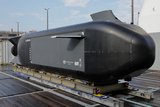
Two Raytheon technologies have been used during a recent test as part of the US Navy’s Stiletto Maritime Technology Demonstration Program during operations at Joint Expeditionary Base Little Creek-Fort Story.
The company’s Intersect Sentry and Persistent Surveillance System Cross Domain Solution (PSS CDS) technologies were combined on Stiletto for the demonstration. Intersect Sentry automatically analysed data streams and sent alerts to the PSS CDS for simultaneous display across various networks, creating a common operating picture for different users operating at multiple classification levels.
PSS CDS is designed to receive data from multiple sensors and provide two-way information and command sharing across classified and unclassified domains. Intersect Sentry is an analysis and automation tool that creates alerts from a variety of intelligence, sensor and reconnaissance data streams according to parameters defined by the user.
Bob Dehnert, command, control and awareness director, Raytheon Intelligence, Information and Services, said: ‘Raytheon has created two capabilities that are easily reconfigured for deployment on multiple missions. They give warfighters proven, automated information sharing and analysis support for surveillance missions in any domain.’
The recent capability demonstration was one of a series sponsored by the Assistant Secretary of Defense for Research & Engineering.




More from Naval Warfare
-
![US Navy’s $275 billion BBGN plan hinges on shipyard transformation]()
US Navy’s $275 billion BBGN plan hinges on shipyard transformation
The US Navy’s planned nuclear-powered warship carries a US$275 billion price tag, but the greater story lies in the industrial overhaul needed to build it, from AI-enabled design to digital twins and modular construction.
-
![Europe’s naval contractors benefit from growing refit and upgrade demand]()
Europe’s naval contractors benefit from growing refit and upgrade demand
Rheinmetall’s order to modernise the German Navy frigate Bayern points to a wider European shift towards extending warship service life as new-build programmes face delay.
-
![The UK joins the movement towards joint procurement]()
The UK joins the movement towards joint procurement
The UK will spend an estimated US$3.89 billion over the next decade in joint naval programmes, a lot of which will be in cooperation with Norway.