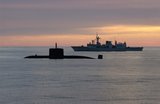
Surface Navy 2018: Raytheon pushes for Tomahawk FMS deals


As the US weighs loosening the reins on foreign military sales (FMS), Raytheon is making the pitch that such sales to allied countries will ultimately keep the nation safer.
Currently, the Trump administration is exploring ways to accelerate FMS deals and Raytheon has indicated that selling its Tomahawk cruise missiles to friendly powers is a great way to keep the production line warm and also provide the US with an extra layer of security.
‘We are working right now with the US government and the navy to create an affordable path to enable us to provide FMS sales
Our news & analysis is now part of Defence Insight®
A Basic-level or higher Defence Insight subscription is now required to view this content.



More from Naval Warfare
-
![Euronaval 2026: Red Cat’s Blue Ops follows USV demand from Asia to the Andes]()
Euronaval 2026: Red Cat’s Blue Ops follows USV demand from Asia to the Andes
With its B-26 USV in full-rate production, Blue Ops is seeking to turn overseas interest into orders through a combination of lower operating costs, UAV integration and local manufacturing.
-
![Euronaval 2026: ‘I want to sell 31 Type 31s by 2031’ - CGO maps Babcock’s global push]()
Euronaval 2026: ‘I want to sell 31 Type 31s by 2031’ - CGO maps Babcock’s global push
Chief growth officer Sir Nick Hine tells Shephard how Babcock is lining up New Zealand, Chile, Denmark and the US for its Arrowhead 140 frigate, speaks on the hybrid navy offer and talks AUKUS.
-
![From Chokepoints to the Deep: ASELSAN’s Naval Vision at EURONAVAL]()
From Chokepoints to the Deep: ASELSAN’s Naval Vision at EURONAVAL
From deployable ship defence to autonomous sea and underwater vehicles, ASELSAN is preparing for a new era of naval security.
-
![Euronaval 2026: by the power of six, Fincantieri’s MMMV reflects modular naval shift]()
Euronaval 2026: by the power of six, Fincantieri’s MMMV reflects modular naval shift
The 50m, six-person ship from the Italian shipbuilder carries swappable, containerised payloads instead of a fixed mission, reflecting a shift that is becoming increasingly evident.
-
![Canada’s submarine availability under pressure as Chicoutimi is unlikely to return to front-line duties]()
Canada’s submarine availability under pressure as Chicoutimi is unlikely to return to front-line duties
HMCS Victoria and HMCS Windsor could return from their current deep maintenance, but unconfirmed operational timelines leave questions over patrol capacity before the first CPSP arrives.