


Suppliers await next step in Australia’s mine warfare transition
Australia’s mine countermeasure capability remains in flux as the Huon-class nears retirement, but accelerated investment in autonomous systems is opening a path for industry.


Safran Electronics & Defense Australasia (SEDA) has received a contract from the Australian government for in-service support of the Royal Australian Navy’s (RAN’s) infrared search and track systems.
Under the contract, SEDA will provide maintenance and support services to the RAN for five years, with options to extend for up to 15 years.
Christopher Pyne, Australia’s Minister for Defence, said: ‘The new contract will extend the company’s Australian footprint and support local employment with the addition of seven fulltime employees.
‘This will lead to a significant reduction in repair timeframes as significant sub-components will no longer need to be returned to France for overhaul and repair.’
SEDA plans to analyse local supply chain options to increase Australian industry capability.


Australia’s mine countermeasure capability remains in flux as the Huon-class nears retirement, but accelerated investment in autonomous systems is opening a path for industry.

As the Iran War draws US ships and marine corps units away from the Indo-Pacific, curtailed exercises and a temporary carrier gap are exposing tensions between Washington’s demand for more self-reliant allies and the joint training needed to realise that ambition.
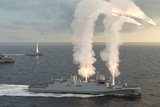
With Canada committed to its River-class replacement and the USN pursuing a lower-cost frigate, Rheinmetall will need to demonstrate where the GMF 140 can fill a capability gap in the North American fleet.

Australian businesses can now bid to support Virginia-class submarine sustainment in Western Australia, as momentum around the Henderson Defence Precinct also builds.
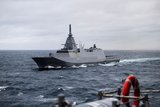
Washington’s search for a foreign-built frigate could hand South Korea, Japan and Turkey a larger prize than a double-hull order: a foothold inside the US shipbuilding industrial base.
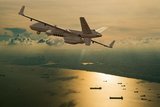
Japan’s FY2027 defence budget backs stand-off strike, a 17-aircraft MQ-9B buy and a declared bid to lead the world in uncrewed maritime assets, alongside new frigates, submarines and support ships.

Connect with us on socials


