Royal Navy’s Type 45 Destroyer Fleet complete


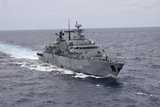
The Royal Navy’s sixth and final Type 45 Destroyer, HMS Duncan, has entered service four months ahead of schedule, and will now begin a programme of trials to prepare the ship and her crew for operational deployment.
The 7,500 tonne vessel was scheduled to enter service in early 2014. Her early handover to the Fleet marks the end of a 13 year build programme with BAE Systems to deliver the six ships – Daring, Dauntless, Diamond, Dragon, Defender and Duncan.
The Type 45s are the most powerful air defence destroyers ever to be deployed by the Royal Navy. All six Type 45s are based at Her Majesty’s Naval Base Portsmouth which will also be the home to the Royal Navy’s Queen Elizabeth Class Carriers.
HMS Duncan measures 152 metres in length and carries the Sea Viper missile defence system, which is designed to be capable of neutralising threats up to 70 miles away.
Philip Dunne, Minister for Defence, Equipment, Support and Technology, said: ‘Thanks to the skill and hard work of the Commanding Officer, the ship’s company and their MoD and industry partners, HMS Duncan has entered service four months early. It is testament to the improving control of projects across the armed forces and significant dedication across defence that all six ships of the Type 45 class are now in the hands of the Royal Navy.
‘The Type 45 programme has provided the Royal Navy with one of the most sophisticated and effective air defence ships available anywhere in the world. We expect these vessels to see decades of service protecting the UK’s interests around the world, including providing humanitarian aid as we saw recently with HMS Daring’s efforts in the Philippines.’
Commander James Stride RN, HMS Duncan’s Commanding Officer, added: ‘The ship’s company is rightly proud to be on-board such a cutting edge warship as she becomes a fully fledged member of the operational Fleet. HMS Duncan joins the Royal Navy as the most advanced ship we have ever operated alongside the rest of the Type 45 class, able to operate across the globe protecting the Fleet.’


More from Naval Warfare
-
![US turns to allies to tackle navy shipbuilding backlog]()
US turns to allies to tackle navy shipbuilding backlog
A White House memorandum acknowledges US Navy shipbuilding backlogs and a weakened industrial base, opening a formal path for South Korean and Japanese yards to help rebuild capacity.
-
![US Navy’s $275 billion BBGN plan hinges on shipyard transformation]()
US Navy’s $275 billion BBGN plan hinges on shipyard transformation
The US Navy’s planned nuclear-powered warship carries a US$275 billion price tag, but the greater story lies in the industrial overhaul needed to build it, from AI-enabled design to digital twins and modular construction.
-
![RTX confirms US Marine Corps and US Navy acquire Hadalus UUV]()
RTX confirms US Marine Corps and US Navy acquire Hadalus UUV
RTX told Shephard that the Hadalus UUV has been procured by the US Marine Corps and the Office of Naval Research for operational experimentation as the company prepares additional demonstrations with the US Navy, NATO and AUKUS partners.