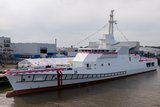
Royal Australian Navy test-fires Raytheon Standard Missile-2
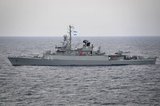
The Royal Australian Navy fired Raytheon Company’s Standard Missile-2 Block IIIA anti-air warfare missile during recent tests on board the HMAS Melbourne.
“With this firing, Melbourne’s crew validated the work done to transition warships from SM-1 capability to SM-2,” said Ron Shields, Raytheon’s SM-2 program director. “This was the first time an SM-2 has been launched by any navy from an upgraded frigate, clearing the way for other fleets to make similar upgrades.”
As the most widely fielded variant of SM-2, Block IIIA is deployed by the US and eight allied navies. The missile is part of a long-range area air defense capability capitalizing on communication techniques, midcourse guidance, advanced signal processing and propulsion improvements. These enhancements substantially increase the intercept range to 90 nautical miles (104 statute miles) and provide high- and low-altitude intercept capability and performance against advanced anti-ship missile threats.
Three other Royal Australian Navy frigates are scheduled to be upgraded to the SM-2 configuration. The modifications, along with upgrades to the combat management systems, launchers and other systems, will improve the ships’ capabilities against low-altitude and supersonic targets and provide extended area air defense protection.
“Standard Missile has been the US Navy’s primary surface-to-air fleet air defense weapon for more than three decades,” said Shields. “This test shows the flexibility of SM-2, and why it is the global air defense missile of choice.”
Source: Raytheon



You may also like

More from Naval Warfare
-
![Argentina’s submarine and frigate acquisitions resurface with $3.5bn funding plan]()
Argentina’s submarine and frigate acquisitions resurface with $3.5bn funding plan
Buenos Aires set out foreign loans worth $3.5 billion in its draft 2027 budget, opening a contest in which Naval Group and TKMS could lead the field.
-
![AUKUS heavyweight torpedo test raises questions over future armed UUV requirements]()
AUKUS heavyweight torpedo test raises questions over future armed UUV requirements
A heavyweight torpedo firing from the Royal Navy’s uncrewed submarine XV Excalibur suggests a shift beyond surveillance, with allied navies eyeing strike roles for large autonomous undersea vessels.
-
![Industrial teams prepare roadmap for Indonesia aircraft carrier transformation]()
Industrial teams prepare roadmap for Indonesia aircraft carrier transformation
Fincantieri and PT PAL have agreed on a framework to modernise the former Giuseppe Garibaldi, with drones, communications and broader Italian–Indonesian industrial ties involved.
-
![Five years on: where could opportunities emerge next for AUKUS Pillar II?]()
Five years on: where could opportunities emerge next for AUKUS Pillar II?
Payload commonality, combat systems and electronic warfare are emerging as likely priorities as the trilateral partnership balances building submarines with sharing industrial ecosystems.
-
![Singapore expands maritime presence with future-ready Sentinel OPV]()
Singapore expands maritime presence with future-ready Sentinel OPV
Singapore is building space for uncrewed systems and future technologies into its new Sentinel-class OPVs, reflecting a wider move towards adaptable vessels capable of maintaining persistent maritime presence.