Oman receives new Patrol Vessel


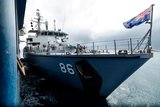
Interim delivery and acceptance of the third Patrol Vessel built by Singapore Technologies Marine for the Royal Navy of Oman (RNO) has taken place, the company announced on 7 January.
ST Marine is working under contract signed in 2012 to design and build four Al-Ofouq class Patrol Vessels to replace the RNO’s four Seeb class vessels.
The Patrol Vessels measure 75m in length and displace approximately 1,250 tonnes. They are armed with a modern weapon and combat management system and are designed for a range of maritime and homeland security missions such as undertaking extended surveillance patrols of Oman’s Exclusive Economic Zone.
The third vessel has been named RNOV Sadh, and the name for the fourth vessel has been announced as RNOV Khasab.
NG Sing Chan, president, ST Marine, said: ‘The interim delivery of the third vessel, RNOV Sadh and naming of the fourth vessel, RNOV Khasab, are proud moments for ST Marine. These milestones are testimonies that we deliver what we promised to our esteemed customers.
‘We understand the importance of timely delivery of the vessels to the RNO as the Sultanate steps up its capability building and modernisation of its naval fleet to meet ever growing demands in the area of maritime security. As the Al-Ofouq programme draws to a close with the fourth vessel scheduled to leave Singapore in May 2016, ST Marine will not rest on our laurel but will continue to relentlessly keep our pace to ensure a smooth finish for this wonderful programme.’

You may also like
More from Naval Warfare
-
![Suppliers await next step in Australia’s mine warfare transition]()
Suppliers await next step in Australia’s mine warfare transition
Australia’s mine countermeasure capability remains in flux as the Huon-class nears retirement, but accelerated investment in autonomous systems is opening a path for industry.
-
![Can the US Navy ask Indo-Pacific allies to do more while training with them less?]()
Can the US Navy ask Indo-Pacific allies to do more while training with them less?
As the Iran War draws US ships and marine corps units away from the Indo-Pacific, curtailed exercises and a temporary carrier gap are exposing tensions between Washington’s demand for more self-reliant allies and the joint training needed to realise that ambition.
-
![How could Rheinmetall’s GMF 140 fit with ongoing programmes in North America?]()
How could Rheinmetall’s GMF 140 fit with ongoing programmes in North America?
With Canada committed to its River-class replacement and the USN pursuing a lower-cost frigate, Rheinmetall will need to demonstrate where the GMF 140 can fill a capability gap in the North American fleet.
-
![Australian industry programme builds pipeline for Virginia-class sustainment]()
Australian industry programme builds pipeline for Virginia-class sustainment
Australian businesses can now bid to support Virginia-class submarine sustainment in Western Australia, as momentum around the Henderson Defence Precinct also builds.
-
![South Korea, Japan and Turkey vie for US shipbuilding access in future frigate contest]()
South Korea, Japan and Turkey vie for US shipbuilding access in future frigate contest
Washington’s search for a foreign-built frigate could hand South Korea, Japan and Turkey a larger prize than a double-hull order: a foothold inside the US shipbuilding industrial base.