Normandie handed over to French DGA


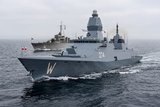
Normandie, the sixth multi-mission frigate (FREMM) built for the French Navy was handed over to France’s Directorate General of Armament (DGA) in Brest on 16 July.
The FREMM programme, being run by OCCAR, is delivering six anti-submarine warfare variant frigates and two anti-aircraft variants by 2022. The vessels are being built by Naval Group.
The DGA has already completed sea trials of Normandie along with an industrial team including Naval Group, the OCCAR FREMM Programme Division and the French Navy.
FREMM is a versatile vessel with advanced automation. Its main missions are maritime zone control, precision strike and support for projection operations.
The vessel is also capable of embarking the Caiman multi-role embedded helicopter.
Related Equipment in Defence Insight



More from Naval Warfare
-
![Canada assesses security equipment changes for Polar Icebreaker Imnaryuaq]()
Canada assesses security equipment changes for Polar Icebreaker Imnaryuaq
The Canadian Department of National Defence is evaluating communications and reconnaissance changes for CCGS Imnaryuaq’s expanded maritime security role, while retaining its 2032 acceptance target.
-
![All eyes on Royal Navy’s Type 93 market engagement as industry prepares bids]()
All eyes on Royal Navy’s Type 93 market engagement as industry prepares bids
Responses are due by 29 October as the Royal Navy tests the market, with BAE Systems’ Herne and MSubs’ Excalibur setting up a contest where payloads may decide the winner.
-
![US Navy’s MQ-25 Stingray approaches carrier-integration tests]()
US Navy’s MQ-25 Stingray approaches carrier-integration tests
Boeing has outlined its upcoming precision-landing and carrier-airspace trials as MQ-25 manufacturing shifts towards Illinois, with initial Lot 1 deliveries expected in 2029.
-
![From Poland to the Pacific: can Miecznik become a blueprint for other navies?]()
From Poland to the Pacific: can Miecznik become a blueprint for other navies?
Babcock is taking its Polish industrial partnership approach to Denmark and New Zealand as navies seek sovereign shipbuilding skills alongside ships.