Nexeya adds multi-domain C2 system to Lyncea family
Lyncea Defend is designed to protect vessels from typical asymmetrical air, sea and land threats


Hensoldt company Nexeya France has integrated a sixth product in its Lyncea suite of naval combat management systems.
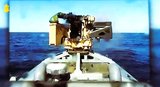
Lyncea Defend is designed to defend vessels from typical asymmetrical threats from air, sea and land, as an integrated 360° multi-domain C2 system.
The tool was developed with the goal of delivering a comprehensive tactical situation assessment for naval crews, Nexeya France announced on 25 November.
‘The centralisation of data accelerates the decision-making process, supports the analysis of critical threats and allows to quickly assign the appropriate countermeasures,’ the company added.
To accomplish this, Lyncea Defend uses advanced software algorithms that analyse behavioural patterns in real time. Potential threats are tracked and classified according to their threat level using smart decision aids. Automatic visual and audible alarm warnings notify operators of threats, and relevant countermeasures can be assigned manually by the crew or automatically by the system.
The other members of the Lyncea family are: Lyncea Mobile (for fast boats), Lyncea Patrol (for patrol boats), Lyncea Combat (for heavily armed patrol boats), Lyncea Command (for command centres) and Lyncea Training (for training centres).
Lyncea is already used by the French Navy on its Floréal-class frigates and D’Estienne d’Orves-class corvettes. It will be deployed on the future POM patrol vessel.
The technology is also deployed by the Cameroonian and Senegalese navies.
As part of our promise to deliver comprehensive coverage to our Defence Insight and Premium News subscribers, our curated defence news content provides the latest industry updates, contract awards and programme milestones.
Related Equipment in Defence Insight


More from Naval Warfare
-
![Singapore expands maritime presence with future-ready Sentinel OPV]()
Singapore expands maritime presence with future-ready Sentinel OPV
Singapore is building space for uncrewed systems and future technologies into its new Sentinel-class OPVs, reflecting a wider move towards adaptable vessels capable of maintaining persistent maritime presence.
-
![From the Baltic to the Gulf: where USV procurement is heading next]()
From the Baltic to the Gulf: where USV procurement is heading next
Saildrone’s new Copenhagen base is one sign of a larger shift, as navies globally turn to uncrewed vessels for surveillance and mine clearance.
-
![Israeli Navy looks to expand as war reshapes future force requirements]()
Israeli Navy looks to expand as war reshapes future force requirements
Israel’s navy is preparing for a larger and more technically diverse role, but its ambitions could be impacted by supply chain restrictions, accelerating demand for domestic naval production as well as autonomous maritime capabilities.
-
![Quantum sensing gathers pace as navies eye undersea advantage]()
Quantum sensing gathers pace as navies eye undersea advantage
As AI dominates defence conversations, industry increasingly points to quantum sensing as the technology set to change submarine and uncrewed underwater vehicle operations.