


Argentina’s submarine and frigate acquisitions resurface with $3.5bn funding plan
Buenos Aires set out foreign loans worth $3.5 billion in its draft 2027 budget, opening a contest in which Naval Group and TKMS could lead the field.


A new submarine training centre opened at Changi Naval Base in Singapore on 11 March, marking a major milestone for the Republic of Singapore Navy’s (RSN’s) local submarine training.
The training centre is a complete training facility that meets all the operational training and qualification requirements for the submariners. It has simulators for team training as well as individual training in realistic virtual scenarios.
The centre has been named the RSS Challenger, after an RSN Challenger-class submarine that retired from service on the same day as the launch of the training centre.
Another RSN Challenger-class submarine, the RSS Centurion, also retired from the RSN’s fleet on 11 March. Both submarines served the country’s navy from 1997.

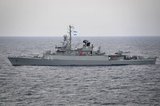
Buenos Aires set out foreign loans worth $3.5 billion in its draft 2027 budget, opening a contest in which Naval Group and TKMS could lead the field.
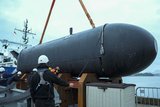
A heavyweight torpedo firing from the Royal Navy’s uncrewed submarine XV Excalibur suggests a shift beyond surveillance, with allied navies eyeing strike roles for large autonomous undersea vessels.
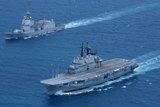
Fincantieri and PT PAL have agreed on a framework to modernise the former Giuseppe Garibaldi, with drones, communications and broader Italian–Indonesian industrial ties involved.

With no formal competition under way, industrial partnerships, production capacity and air defence capability could all shape the programme as Denmark considers how to replace its three Iver Huitfeldt-class frigates.
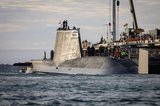
Payload commonality, combat systems and electronic warfare are emerging as likely priorities as the trilateral partnership balances building submarines with sharing industrial ecosystems.
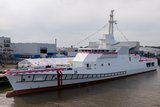
Singapore is building space for uncrewed systems and future technologies into its new Sentinel-class OPVs, reflecting a wider move towards adaptable vessels capable of maintaining persistent maritime presence.

Connect with us on socials


