New Iranian destroyer still months away from beginning operations
The latest addition to the Iranian Navy’s surface fleet, the indigenously produced missile destroyer Dena, will become operational in the coming months, according to Iran’s Defence Minister Brig Gen Amir Hatami.


Announcing the timeline for vessel’s introduction on 23 November, state news outlet IRNA said that the destroyer brought new capabilities to the Iranian Navy. The announcement came almost a year to the day that it was first revealed the vessel will be equipped with a vertical launch system (VLS).
Iran often releases statements promoting its indigenous design and manufacturing capabilities that are difficult to verify. Recently, it revealed its first ‘ocean-going aircraft carrier’, which turned out to be a repainted and slightly modified roll on/roll off merchant vessel.
One of seven Mowj-class destroyers planned to enter service with the IRIN, Dena and its sister ships are significantly smaller than modern destroyers at around 95m in length and displacing 1,500t. By way of comparison the class are only 5m longer than the UK’s River-class Batch 2 OPVs and displace 25% less tonnage.
The small size of the Mowj class would make the realisation of an effective VLS capability a difficult undertaking, and would likely be limited to aerial point defence purposes due to cell length requirements needed for maritime strike.
In comparison, the MK 41 VLS in service with a variety of Western or Western-aligned navies tops out at 7.6m in length and are typically deployed in frigate and destroyer-sized vessels. A smaller 5.2m version is considered to be suitable for smaller offshore patrol vessels and corvettes, but would be utilised for self-defence purposes only.
As part of our promise to deliver comprehensive coverage to our Defence Insight and Premium News subscribers, our curated defence news content provides the latest industry updates, contract awards and programme milestones.

You may also like

More from Naval Warfare
-
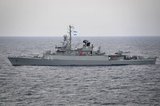
![Argentina’s submarine and frigate acquisitions resurface with $3.5bn funding plan]()
Argentina’s submarine and frigate acquisitions resurface with $3.5bn funding plan
Buenos Aires set out foreign loans worth $3.5 billion in its draft 2027 budget, opening a contest in which Naval Group and TKMS could lead the field.
-
![AUKUS heavyweight torpedo test raises questions over future armed UUV requirements]()
AUKUS heavyweight torpedo test raises questions over future armed UUV requirements
A heavyweight torpedo firing from the Royal Navy’s uncrewed submarine XV Excalibur suggests a shift beyond surveillance, with allied navies eyeing strike roles for large autonomous undersea vessels.
-
![Industrial teams prepare roadmap for Indonesia aircraft carrier transformation]()
Industrial teams prepare roadmap for Indonesia aircraft carrier transformation
Fincantieri and PT PAL have agreed on a framework to modernise the former Giuseppe Garibaldi, with drones, communications and broader Italian–Indonesian industrial ties involved.
-
![Five years on: where could opportunities emerge next for AUKUS Pillar II?]()
Five years on: where could opportunities emerge next for AUKUS Pillar II?
Payload commonality, combat systems and electronic warfare are emerging as likely priorities as the trilateral partnership balances building submarines with sharing industrial ecosystems.
-
![Singapore expands maritime presence with future-ready Sentinel OPV]()
Singapore expands maritime presence with future-ready Sentinel OPV
Singapore is building space for uncrewed systems and future technologies into its new Sentinel-class OPVs, reflecting a wider move towards adaptable vessels capable of maintaining persistent maritime presence.