AUSA 2023: Steadicopter aims to fly high with new rotary UAVs
Steadicopter's Black Eagle on display at AUSA 2023. (Photo: Wilder Alejandro Sanchez)
Israeli manufacturer Steadicopter presented its new Black Eagle and Golden Eagle rotary unmanned aerial vehicles (UAVs) for the first time in the US at AUSA. Shephard spoke with Steadicopter CEO Itai Toren about what makes these Eagles different from other birds in the market.


Steadicopter has a family of Black Eagles, among which the version presented at AUSA 2023 in Washington DC last week was the largest, weighing 50kg as the max take-off weight.
Steadicopter CEO Itai Toren explained that the Black Eagle shown at AUSA was the 50 H maritime configuration equipped with three sensors. The Black Eagle 50 accommodates EO/IR technology, a maritime patrol radar (MPR), an AIS receiver and other tactical communication relays.
‘The Black Eagle can land on ships, even moving vessels, or fly from the shore to a small coastal patrol vessel with a limited landing area,’ Toren remarked, adding that
Our news & analysis is now part of Defence Insight®
A Basic-level or higher Defence Insight subscription is now required to view this content.



More from Naval Warfare
-
![All eyes on Royal Navy’s Type 93 market engagement as industry prepares bids]()
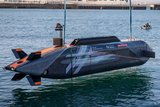
All eyes on Royal Navy’s Type 93 market engagement as industry prepares bids
Responses are due by 29 October as the Royal Navy tests the market, with BAE Systems’ Herne and MSubs’ Excalibur setting up a contest where payloads may decide the winner.
-
![US Navy’s MQ-25 Stingray approaches carrier-integration tests]()
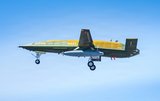
US Navy’s MQ-25 Stingray approaches carrier-integration tests
Boeing has outlined its upcoming precision-landing and carrier-airspace trials as MQ-25 manufacturing shifts towards Illinois, with initial Lot 1 deliveries expected in 2029.
-
![From Poland to the Pacific: can Miecznik become a blueprint for other navies?]()
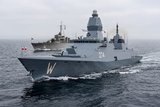
From Poland to the Pacific: can Miecznik become a blueprint for other navies?
Babcock is taking its Polish industrial partnership approach to Denmark and New Zealand as navies seek sovereign shipbuilding skills alongside ships.
-
![Unsettled waters in the North: can navies still trust their Arctic acoustic maps?]()
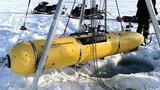
Unsettled waters in the North: can navies still trust their Arctic acoustic maps?
The changing Arctic environment is creating new challenges for submarine detection, driving demand for distributed sensors, uncrewed underwater vehicles and real-time acoustic modelling.