M Cubed Technologies, Inc. wins US Army contract
Under a contract awarded by the United States Army, M Cubed Technologies, Inc. will develop advanced armor to protect Army vehicles and US service personnel from increasingly lethal enemy ballistic threats. The contract was part of the US Army's Small Business Innovation Research (SBIR) program.
"We are excited to have the opportunity to apply M Cubed's innovative technology to this critical mission," said Randall D. Price, Sr., CEO and President of M Cubed. "We are confident we can deliver an armor solution that will be more resistant to direct fire, provide greater protection against multiple hits and be readily adaptable to changing mission needs - all at a competitive cost."
To meet both current and future threats, the Army called for a ceramic/metal composite armor solution that could provide enhanced blast and penetration resistance against both direct hits and fragments; would withstand both thermal shock and chemical attacks without being damaged or degraded; could tolerate harsh environments such as heat, cold, sand, water and salt; and could be produced at low costs and high volumes.
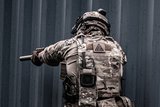
M Cubed's unique technology allows the company to design and manufacture armor-grade ceramics and ceramic/metal composites in very complex shapes to suit a wide variety of military applications, including body armor, helmet appliques and armor for aircraft and vehicles. The company has a long history as a trusted supplier to the US military.
Source: M Cubed





More from Land Warfare
-
![Drone wars: countries are looking for answers but do companies have the solutions?]()
Drone wars: countries are looking for answers but do companies have the solutions?
Manufacturers are speeding up their counter-drone development efforts as countries increasingly focus on procurements to provide battlefield and national protection.
-
![Sweden seeks US HIMARS missile system to expand long-range strike capability]()
Sweden seeks US HIMARS missile system to expand long-range strike capability
The proposed $920 million deal would provide Sweden with a step up from its existing tube artillery and align the country with other northern European nations that have selected the HIMARS platform.
-
![Thales Storm 2 counter-drone system being evaluated by potential customers]()
Thales Storm 2 counter-drone system being evaluated by potential customers
The attack drone threat from first-person view uncrewed aerial systems has been highlighted by recent conflicts and Thales has adapted its Storm 2 counter-improvised explosive device jammer to provide protection.
-
![Rolls-Royce to lead powertrain development for MGCS in important step for the programme]()
Rolls-Royce to lead powertrain development for MGCS in important step for the programme
The move signals significant progress for the delayed Franco-German Main Ground Combat System programme with first powerpack prototypes set to be tested before the end of the decade.