


UK Defence Investment Plan: What does it mean for the country’s naval forces?
Investment in nuclear submarines, autonomous systems and stronger defensive capabilities for existing vessels show a clear strategic shift in Royal Navy priorities.


V-Step’s maritime simulators and training applications will be available in the Philippines market under a new strategic alliance with Poseidon Asia.
Poseidon Asia is the local office of Poseidon Simulation, which is part of the Poseidon Group with head office in the Lofoten Islands in Norway. The company specialises in the development of user-friendly and cost-effective PC-based maritime instrument simulators.
Under this agreement, V-Step’s NAUTIS maritime simulator solutions and virtual training software will be marketed to customers in the Philippines’ maritime education and training sector, including maritime institutions, maritime training centres, and local ship management and crew manning companies.
NAUTIS provides simulator solutions and virtual training software for both civilian and naval military applications. Its DNV-certified simulators allow training in compliance with all known design criteria, class, and IMO requirements.
An official NAUTIS simulator demonstration centre will be opened in Manila to complement Poseidon Asia’s existing showroom and laboratory in Makati.


Investment in nuclear submarines, autonomous systems and stronger defensive capabilities for existing vessels show a clear strategic shift in Royal Navy priorities.
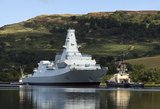
With a revised Defence Investment Plan on the way ahead of the upcoming NATO Summit on 7-8 July, the UK government has begun to reveal more details of how its future naval fleet could look.
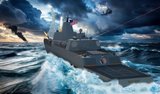
Lawmakers question the US Navy’s proposed $2 billion investment in the Trump-class battleship as concerns over cost, technology maturity and operational relevance fuel growing bipartisan scrutiny on Capitol Hill.
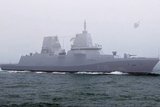
On 24 June 2026, the German Ministry of Defence announced it was cancelling the F126 frigate programme in favour of procuring eight MEKO A-200 DEU frigates.
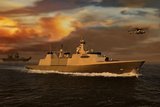
The UK shipbuilder’s full-year results to the end of March revealed the impact of the £140 million charge linked to design changes and rework on the Royal Navy’s Type 31 frigate programme.
The US Navy is increasing the use of OTA obligations to accelerate the procurement of seabed-subsea, littoral, expeditionary and uncrewed solutions.

Connect with us on socials


