USGC transfers cutter to Vietnam


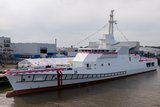
The US Coast Guard (USCG) has transferred the decommissioned Hamilton class high endurance cutter WHEC 722 to the Vietnam Coast Guard, the USCG announced on 26 May.
This marks the eighth cutter transfer through the USCG’s Office of International Acquisition’s Excess Defense Articles programme and the first to another nation’s coast guard. The 378ft ship will be the largest in the Vietnamese Coast Guard’s fleet.
Before the cutter leaves for Da Nang, Vietnam, the Office of International Acquisition is supporting the vessel’s maintenance, upgrade and training period in Honolulu. The USCG is providing $13.9 million worth of transfer support, including equipment procurement and installation.
Each high endurance cutter transfer helps the USCG avoid approximately $12 million in disposal costs, in addition to helping build and sustain global maritime partnerships in support of the service’s national maritime strategy.
The WHEC 722, which entered service in March 1969, was decommissioned in April 2017. Three high endurance cutters have been transferred by the USCG to the Philippine Navy and two each to the Bangladeshi and Nigerian navies. Four cutters in the class remain in service in the Pacific.
The high endurance cutters are being replaced by the incoming National Security Cutters (NSC), six of which are already in service.


More from Naval Warfare
-
![AUKUS heavyweight torpedo test raises questions over future armed UUV requirements]()
AUKUS heavyweight torpedo test raises questions over future armed UUV requirements
A heavyweight torpedo firing from the Royal Navy’s uncrewed submarine XV Excalibur suggests a shift beyond surveillance, with allied navies eyeing strike roles for large autonomous undersea vessels.
-
![Industrial teams prepare roadmap for Indonesia aircraft carrier transformation]()
Industrial teams prepare roadmap for Indonesia aircraft carrier transformation
Fincantieri and PT PAL have agreed on a framework to modernise the former Giuseppe Garibaldi, with drones, communications and broader Italian–Indonesian industrial ties involved.
-
![Five years on: where could opportunities emerge next for AUKUS Pillar II?]()
Five years on: where could opportunities emerge next for AUKUS Pillar II?
Payload commonality, combat systems and electronic warfare are emerging as likely priorities as the trilateral partnership balances building submarines with sharing industrial ecosystems.