USCG commissions 17th cutter


The US Coast Guard (USCG) has commissioned USCG cutter Donald Horsley, the 17th Fast Response Cutter (FRC) or Sentinel-class cutter, it announced on 20 May.
This is the fifth FRC to be stationed in the San Juan sector of the USCG. Another 12 FRCs are currently in service in Florida, with six in Key West and six in Miami.
The FRC is designed for near-offshore patrolling for missions such as search and rescue, law enforcement, defence readiness and coastal, port and waterway security.
It replaces the 110ft Island-class patrol boats. It has a length of 154ft, beam of 25ft, top speed of over 28 knots and endurance of five days. The vessels can launch and recover over-the-horizon cutter boats from side davits or astern.
Of the 58 FRCs planned by the USCG, 38 have been ordered so far. The next FRC will also be commissioned for stationing in San Juan. It is scheduled for delivery in June 2016.


More from Naval Warfare
-
![A400M trial demonstrates airborne deployment of uncrewed surface vessel]()
A400M trial demonstrates airborne deployment of uncrewed surface vessel
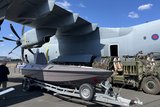
Kraken Technology Group’s A400M airdrop of a K3 Scout uncrewed surface vessel points to a new way for navies to insert USVs into contested waters, bypassing ports and motherships.
-
![From the seas to the web: the changing shape of UK defence in Southeast Asia]()
From the seas to the web: the changing shape of UK defence in Southeast Asia
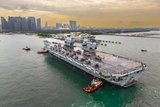
As his final engagement before leaving his post as the head of the British defence staff for Southeast Asia and defence adviser to Singapore, Brigadier Eddie Maskell-Pedersen spoke with Shephard about maritime security, cyber cooperation and long-term partnerships.
-
![Naval primes dive into an underwater acquisition gold rush]()
Naval primes dive into an underwater acquisition gold rush
A cluster of acquisitions by Fincantieri, Thales, Lockheed Martin and Rheinmetall points to a race to secure underwater warfare, autonomy and sensing capability.
-
![Baltic naval priorities shift towards mine warfare and versatile platforms]()
Baltic naval priorities shift towards mine warfare and versatile platforms
Baltic states are investing in mine warfare, uncrewed systems and multirole platforms as major warship purchases remain scarce, industry sources indicate.