Ultra Electronics to support CSC programme
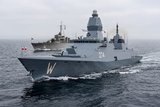
Ultra Electronics Maritime Systems has received a sub-contract from Lockheed Martin Canada to work on the integration of underwater systems for the Canadian Surface Combatant (CSC) programme, the company announced on 19 February.
Irving Shipbuilding is the CSC’s prime contractor and will build all 15 ships at its Halifax Shipyard.
Ultra, as the anti-submarine warfare (ASW) lead, will provide a low-frequency active and passive towed sonar system paired with its next-generation hull-mounted sonar and will lead the integration of these sensors with sonobuoys and other capabilities for wide-area underwater battlespace surveillance.
The winning Lockheed Martin Canada bid, based around BAE’s Type 26 Global Combat Ship, was put forward by a team comprised of six companies: BAE Systems, CAE, Lockheed Martin Canada, L3 Technologies, MDA, and Ultra Electronics. The Type 26 is a multi-role warship designed specifically for ASW and will be capable of performing a wide range of missions around the globe.
Bernard Mills, president of Ultra Electronics Maritime Systems, said: ‘Ultra is proud to be a member of Canada’s successful CSC Home Team. As the underwater warfare lead, we are using our considerable depth of ASW experience and capability to ensure Canada’s new ships will provide an enduring operational advantage to the Royal Canadian Navy.’
Related Equipment in Defence Insight




More from Naval Warfare
-
![Autonomy gives Turkey a chance to outflank established naval shipbuilders]()
Autonomy gives Turkey a chance to outflank established naval shipbuilders
Turkish shipbuilders have sold ships from Asia to Europe, but autonomy and swarm technology could give them a fairer fight against Western European rivals.
-
![Canada assesses security equipment changes for Polar Icebreaker Imnaryuaq]()
Canada assesses security equipment changes for Polar Icebreaker Imnaryuaq
The Canadian Department of National Defence is evaluating communications and reconnaissance changes for CCGS Imnaryuaq’s expanded maritime security role, while retaining its 2032 acceptance target.
-
![US Navy’s MQ-25 Stingray approaches carrier-integration tests]()
US Navy’s MQ-25 Stingray approaches carrier-integration tests
Boeing has outlined its upcoming precision-landing and carrier-airspace trials as MQ-25 manufacturing shifts towards Illinois, with initial Lot 1 deliveries expected in 2029.
-
![From Poland to the Pacific: can Miecznik become a blueprint for other navies?]()
From Poland to the Pacific: can Miecznik become a blueprint for other navies?
Babcock is taking its Polish industrial partnership approach to Denmark and New Zealand as navies seek sovereign shipbuilding skills alongside ships.