USCG preps for UAS integration


The US Coast Guard is moving toward the release of a request for proposal for a small UAS capability for its National Security Cutters (NSCs), with a number of training and concept of operations development projects underway.
As part of work to stay informed on the state of the UAS market, acquisition personnel have attended operational training with Insitu to achieve the certification required to operate the ScanEagle UAS.
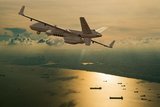
The coast guard will use a contractor-owned and -operated ScanEagle UAS this winter to test integration and a concept of operations for UAS on USCGC Stratton based in Alameda, California. The service will use the deployment data to refine requirements for installing and integrating future systems across the NSC class.
The training course will also help the acquisition programme to more effectively analyse and assess potential UAS for NSC solutions.
The course included training to perform launch, recovery and minor maintenance. A ten day mission coordinator course was also carried out by Stratton crew to better understand capabilities, limitations and standard operation of the ScanEagle and the command, control and coordination functions to smoothly integrate operations.
The Coast guard plans to release a request for proposal for small UAS for NSC capability by the end of 2017, with contract award for the retrofit of Stratton and one additional NSC targeted for 2018.
Related Equipment in Defence Insight

You may also like
More from Naval Warfare
-
![Suppliers await next step in Australia’s mine warfare transition]()
Suppliers await next step in Australia’s mine warfare transition
Australia’s mine countermeasure capability remains in flux as the Huon-class nears retirement, but accelerated investment in autonomous systems is opening a path for industry.
-
![Can the US Navy ask Indo-Pacific allies to do more while training with them less?]()
Can the US Navy ask Indo-Pacific allies to do more while training with them less?
As the Iran War draws US ships and marine corps units away from the Indo-Pacific, curtailed exercises and a temporary carrier gap are exposing tensions between Washington’s demand for more self-reliant allies and the joint training needed to realise that ambition.
-
![How could Rheinmetall’s GMF 140 fit with ongoing programmes in North America?]()
How could Rheinmetall’s GMF 140 fit with ongoing programmes in North America?
With Canada committed to its River-class replacement and the USN pursuing a lower-cost frigate, Rheinmetall will need to demonstrate where the GMF 140 can fill a capability gap in the North American fleet.
-
![Australian industry programme builds pipeline for Virginia-class sustainment]()
Australian industry programme builds pipeline for Virginia-class sustainment
Australian businesses can now bid to support Virginia-class submarine sustainment in Western Australia, as momentum around the Henderson Defence Precinct also builds.
-
![South Korea, Japan and Turkey vie for US shipbuilding access in future frigate contest]()
South Korea, Japan and Turkey vie for US shipbuilding access in future frigate contest
Washington’s search for a foreign-built frigate could hand South Korea, Japan and Turkey a larger prize than a double-hull order: a foothold inside the US shipbuilding industrial base.