Sweden commits US$684.7 million in equipment and funds to Ukraine
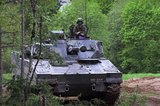
Ukrainian force already have CV90s and more are on the way. (Photo: Försvarsmakten)
Sweden has announced another package of support for Ukraine, following hot on the heels of Canada’s additional support announced this week and last week’s support from the UK and the EU.


Sweden has announced its 15th and largest support package to Ukraine, a commitment worth SEK7.1 billion (US$684.7 million) which will include naval and marine systems, as well as a budget to purchase more BAE Systems Hägglunds CV90 combat vehicles.
The funding, along with an addition of SEK700 million in package 14, has brought Sweden’s total military support to Ukraine since Russia’s invasion of the country in February 2022 to SEK30 billion.
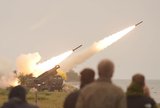
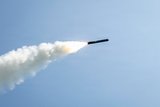
The package included a maritime initiative that includes Combat Boat 90s, small and fast motorboats (G-boats), and underwater weapons.
The package also featured artillery ammunition, an anti-aircraft system, light anti-tank weapons, recoilless rifles, hand grenades, medical equipment, medical transport vehicles, food, and financial support to bilateral and multilateral projects or funds.
Specific elements of the package included 155mm ammunition worth about SEK2 billion and, according to a government statement, “Sweden is engaged in a dialogue about this matter with Denmark and Finland”.
The maritime commitment consisted of 10 Combat Boat 90s, 20 Group Boats (G-boats) and underwater weapons worth about SEK1.1 billion.
The package featured Saab RBS 70 anti-aircraft system and BGM-71 (RBS 55) light anti-tank weapons, as well as recoilless rifles with ammunition, personal equipment in the form of hand grenades, medical equipment, medical transport vehicles and food.
According to the Swedish government, the equipment in the support package has been used by the Swedish Armed Forces, but it has “made the assessment that it may be donated if replacement purchases are made soon”.
Related Equipment in Defence Insight

You may also like
More from Defence Notes
-
![Growing a digital backbone: an essential capability for the multi-domain battlespace]()
Growing a digital backbone: an essential capability for the multi-domain battlespace
Future operational superiority will be defined by the ability to connect systems, data and personnel into a wider network. For armed forces, this creates the need for a digital backbone that integrates and enhances sensors and effectors of all kinds.
-
![Estonia opts for smart, adaptable and cooperative solutions in the face of Russian threat]()
Estonia opts for smart, adaptable and cooperative solutions in the face of Russian threat
Estonian-made equipment is being put through the toughest of evaluations in the hands of Ukrainian soldiers resisting the full-scale Russian invasion which began in 2022. The country has long seen the threat and is continuing to adapt for the future.
-
![Estonia boosting defence industry with lessons from Ukraine, says country’s economic minister]()
Estonia boosting defence industry with lessons from Ukraine, says country’s economic minister
Estonia is looking to boost its local defence industry with directed funding, industry parks, support through international orders for equipment and rapid prototyping.
-
![UK faces cost of balancing defensive capabilities abroad as Iran conflict widens]()
UK faces cost of balancing defensive capabilities abroad as Iran conflict widens
The UK has recently deployed a Type 45 destroyer to Cyprus and has bolstered its presence in the Middle East in recent weeks with supporting air power to protect neighbouring countries’ air defences.
-
![White House calls on Pentagon contractors to “rapidly and aggressively” boost weapon production]()
White House calls on Pentagon contractors to “rapidly and aggressively” boost weapon production
Intended to sustain Operation Epic Fury against Iran, efforts to increase the production of weapons and ammunition could expose long-standing weaknesses in the US defence industrial base.
-
![India’s strategic defence footprint expansion could be accelerated by Iran-Israel conflict]()
India’s strategic defence footprint expansion could be accelerated by Iran-Israel conflict
The latest escalation between Iran and Israel could shape New Delhi’s next-generation shield as India deepens cooperation with Israel on missile defence and drone production.