Growing a digital backbone: an essential capability for the multi-domain battlespace (Studio)
Future operational superiority will be defined by the ability to connect systems, data and personnel into a wider network. For armed forces, this creates the need for a digital backbone that integrates and enhances sensors and effectors of all kinds.


Brought to you in partnership with Rheinmetall
Modern conflicts – such as Ukraine and Iran – demonstrate that it is no longer sufficient to prioritise a single domain, according to Daniel Scheer, Head of Business Development at Rheinmetall Digital Systems. Instead, militaries must achieve multi-domain connectivity, which demands synchronised deployment of capabilities across land, air, sea, cyber and space.
“Operational advantage is achieved by the speed at which information can be collected, processed, shared and translated into coordinated actions across all these domains. Everything has to work together,” he emphasised.
Overcoming challenges
The transition to this digital-enabled battlespace poses structural challenges for NATO forces and their allies, noted Scheer. Many legacy platforms were not designed to work in network-centric operations, leading to fragmentation, while there are also data siloes across services and domains.
At a wider level, militaries face restrictions on interoperability across branches and between nations. Compounding this are “slow innovation cycles compared to the pace of technological change,” Scheer said.
Digital-enabled ecosystems will be crucial to overcome these challenges. “Future combat effectiveness will be defined by the convergence of platforms, software and data, instead of focusing purely on standalone systems and a silo-based approach,” he noted.
At Rheinmetall, this convergence is built around Battlesuite, a digital ecosystem that provides a secure, interoperable network for operations, integrating technologies for combat missions, exercises and training. Battlesuite is based on TacticalCore middleware, an operating platform that controls communication and data flow between sensors, software and partners.
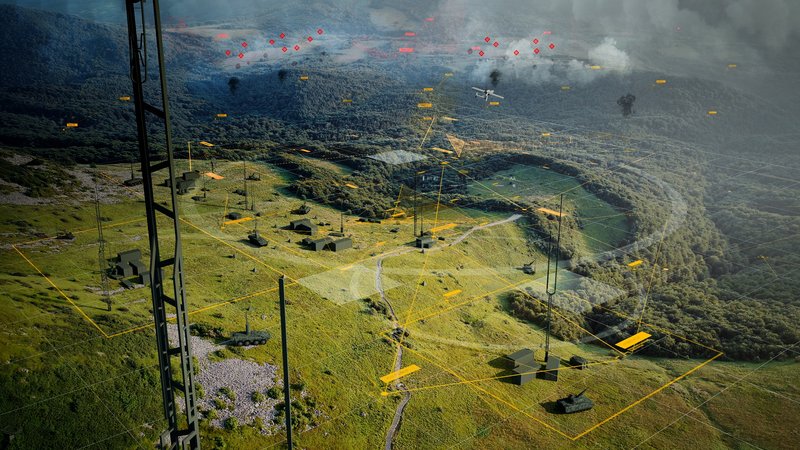
The system provides a range of optional software applications that can be used in everything from modelling and simulation to command and control (C2) support. Ultimately, this enables data from different sensors to be fused and shared, allowing effectors to be coordinated throughout the battlespace.
“This builds on the concept of the sensor-to-shooter loop: continuous situational awareness, software fusion and the ability to provide information in real time, leading to far greater coordination across effectors in all domains,” Scheer explained.
Software-defined defence
The Battlesuite concept – along with other technologies in the digital ecosystem – reflects a shift towards software-defined defence, said Scheer, where functionality and capabilities of systems can evolve over time through upgrade rollouts rather than hardware replacements.
This rapid evolution has been driven by lessons from recent conflicts, said Scheer. Real-world operations have delivered insights on the effective use of existing weapon systems and their respective strengths and weaknesses.
Rheinmetall has sought to swiftly adapt such lessons into its own designs and product development. “We are making rapid progress, particularly in the fields of unmanned and autonomous systems, and artificial intelligence,” Scheer said.
However, it is vital to embrace advances at a wider level, he stressed. Crucially, Battlesuite is built on an open architecture, and is open to other industry partners.
As a system-of-systems integrator across domains, the company can combine its own platforms and partner technologies into a single architecture, providing a coherent operational framework. Importantly, this would function as an add-on, without requiring a complete overhaul of military systems.
Open architecture
Many armed forces face the same challenges in adapting to the new battlespace, said Scheer. On the one hand, there are technology barriers, ranging from fragmented infrastructure to incompatible communication standards or limited data integration.
There are also organisational barriers to address, he noted, with a need to move on from domain-centric command structures, restricted cross-service integration and slow procurement processes.
Finally, there are significant industrial challenges: proprietary systems, a lack of open standards and fragmented supply chains.
Concepts like Battlesuite help address these issues through the software-defined approach, Scheer stressed: “We are focusing on standardised interfaces, open APIs and scalable digital infrastructure. This enables armed forces to achieve seamless connectivity across heterogeneous fleets and with multinational partners.”
Effective collaboration
To meet increased demand and expanding requirements, Rheinmetall is expanding its own capacity through organic company growth, noted Scheer, as well as via strategic partnerships or M&A.
The company maintains a close and ongoing dialogue with military customers and end-users around the world, he added: “This is the baseline to achieve first-hand experience in order to understand the evolving operational concepts and capability gaps.”
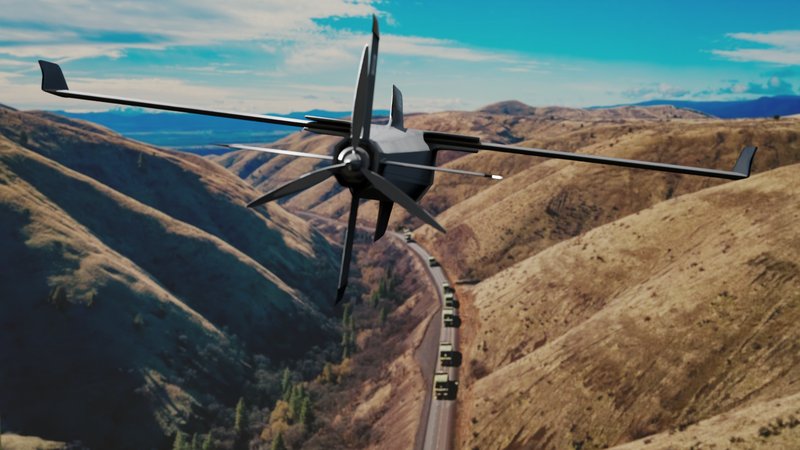
Rheinmetall is working with a German customer on the digitalisation of land-based platforms, where thousands of legacy systems would be upgraded to meet the demands of software-defined defence. Its expertise across domains means it can “move from concept to deployment capabilities much faster than traditional defence acquisition cycles, which normally take several years,” Scheer said. For example, he highlighted the rapid development of the FV-014 loitering munition, which went from an idea to a product in just eight months.
Such speed of development is increasingly critical, he said, with a need for cycles that take months rather than years.
Rheinmetall aims to tackle this through several initiatives, such as utilising a modular system design, a focus on software-based upgrades, and a spiral development approach “in which capabilities can be introduced incrementally, allowing forces to gain operational benefits while the systems continue evolving.”
Battlespace dominance is digital
A range of core technologies will significantly shape the future MDO battlespace, Scheer concluded. He pointed again to autonomous and uncrewed systems, noting that they will “extend the sensor and effector network across all domains.”
AI is a clear priority, he reiterated, enabling faster decision-making and improved situational awareness. The space domain – including SATCOM and orbital sensors – will provide enhanced connectivity and intelligence support.
Training is also a vital component as armed forces adapt to the digital backbone needed for true MDO. The digitalisation of the battlespace offers advantages in this area, Scheer said. For example, the use of digital twins provides significant benefits, alongside wider advances in simulation. This is particularly important at a time of growing interest in training conscripted civilians or reserve forces, a notable demand from Eastern European countries.
Rheinmetall Digital Systems is investing heavily in advanced simulation environments, digital training platforms, and integrated lifecycle support, said Scheer, “to ensure that new capabilities can be adopted quickly and used effectively from day one.”
While different nations’ armed forces will have varying priorities, future advances must be built on a digital architecture, he concluded.
“Rheinmetall will continue to evolve towards fully integrated digital combat ecosystems that combine the platform, the sensor, the effector, autonomous systems and the digital infrastructure into one coherent, MDO architecture.”
Discover how Rheinmetall is enabling multi-domain operations through its Battlesuite digital ecosystem.



More from Studio
-
![Layered protection: How air defence is adapting to rising drone and missile threats (podcast)]()
Layered protection: How air defence is adapting to rising drone and missile threats (podcast)
A surge in aerial threats – from advanced missiles to low-cost drones – is reshaping the way militaries approach air defence, driving demand for flexible, multi-layered solutions.
-
![Light Reconnaissance Strike – enabling a vital mission set (Studio)]()
Light Reconnaissance Strike – enabling a vital mission set (Studio)
A new system-of-systems concept will unlock digital integration of sensors and weapons for Light Forces, allowing them to shape the battlefield environment on their own terms and upgrade legacy platforms.
-
![Energy evolution: How laser defence systems are powering the next phase of air defence (podcast)]()
Energy evolution: How laser defence systems are powering the next phase of air defence (podcast)
Laser-based air defence is moving from promise to deployment as global threats evolve. In this special podcast, we explore how high-energy laser systems are reshaping interception strategies.
-
![Unlocking the potential of Light Forces in modern warfare (Studio)]()
Unlocking the potential of Light Forces in modern warfare (Studio)
The Ukraine conflict has highlighted the strategic importance of “Light Forces” – rapidly deployable dispersed units, able to conduct an expanding range of mission sets. What technologies and equipment are needed to ensure their success in combat?
-
![Resilience, adaptiveness and collaboration vital for success in space (Studio)]()
Resilience, adaptiveness and collaboration vital for success in space (Studio)
Speakers at the Defence In Space Conference (DISC) 2025 highlighted the critical and evolving role of space in national security, defence and the global economy.