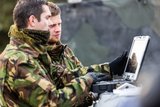
Saab opens Philippines office


Saab is looking to further develop its business in the Philippines with a new office now open in Manilla.
The new office – the company’s tenth dedicated country unit office in the Asia Pacific – will form the headquarters of Saab’s country unit serving the Philippines, which will be formally established in January 2017.
The company’s identified future business opportunities in the Philippines include the Gripen fighter, naval combat systems, maritime and air traffic management systems, and training systems and solutions.
Dan Enstedt, president and CEO of Saab Asia Pacific, said: ‘Saab already does about 25 per cent of our annual business in Asia Pacific. That number has grown steadily over the years, will continue to grow and I expect that the Philippines will be part of this story.
‘We have steadily increased our presence in the region by opening different country offices to be close to the customer. That is a key part of how we do business all over the world. Our new office in Manila is Saab’s tenth in Asia Pacific, and I don’t think it will be the last.’

More from Defence Notes
-
![UK urged to prioritise sea, air and space over heavy armour]()
UK urged to prioritise sea, air and space over heavy armour
A report from the Council on Geostrategy argues the UK should move away from a traditional balanced force and shift investment to naval, air and space capabilities, backed by a larger fleet of attack submarines and deeper AUKUS integration.
-
![Thales: deployment speed to determine winners in ‘production versus production’ era]()
Thales: deployment speed to determine winners in ‘production versus production’ era
At its technology summit in London, attended by Shephard, Thales UK examined the importance of speed to delivery, the growing focus on cross-domain capabilities and how procurement reform could be crucial for future battlefield advantage.
-
![Orchestrating operational readiness across every defence domain]()
Orchestrating operational readiness across every defence domain
Are all systems ready for the next mission? Have upgrades been applied? Are all assets aligned to deploy together, on time and fully prepared? In modern defence operations, readiness is no longer measured platform by platform. It is measured by how well people, assets, data and decisions move together — across land, sea and air.