


From systems integrator to multi-domain solutions provider (video)
Philipp von Brandenstein, Head of Corporate Communications at Rheinmetall, explains how Eurosatory 2026 marked a new stage in the company's evolution.


CAE has sold three CAE 7000 Series full-flight simulators (FFSs) and two integrated procedures trainers (IPTs) to Lion Air.
One FFS is for the ATR 72-500 aircraft and the other two for the Boeing 737-900ER model. CAE will also deliver two CAE Simfinity integrated procedures trainers. The contract, valued at approximately C$38 million at list prices, brings the total FFS sales that CAE has announced to date during fiscal year 2010 to 19.
Two of the simulators, plus two IPTs for the Boeing 737NG, will be delivered to the Lion Air Training Centre at Soekarno-Hatta International Airport, Jakarta, Indonesia in 2011. The third simulator will be delivered at a later date. Lion Air currently operates a CAE-produced Boeing 737-900ER FFS and one CAE Simfinity Boeing 737 IPT which entered service two years ago.
“We are delighted that Lion Air has again placed their confidence in CAE’s advanced technology flight simulation solutions,” said Jeff Roberts, CAE’s group president, civil simulation products, training and services. “Lion Air has been one of the fast-growing carriers in the region, and we look forward to meeting their pilot training needs as they further expand their fleet.”
The simulators will incorporate full six-degree-of-freedom CAE True electric motion systems and new-generation CAE Tropos-6000 visual systems, including liquid crystal on silicon (LCoS) projectors and 200-by-40-degree field-of-view visual displays. The simulators are expected to be certified to Level D by Indonesia’s Directorate-General of Civil Aviation (DGCA).
“The quality of training our pilots receive in CAE simulators enhances both the safety of our passengers and efficiency of our operations,” said Rusdi Kirana, president director and co-founder of Lion Air. “Delivery of the 737-900ER full-flight simulators will support our Lion Air regional growth, and the ATR 72-500 device will be used for our Wings Air domestic route subsidiary and third-party customer training.”


Philipp von Brandenstein, Head of Corporate Communications at Rheinmetall, explains how Eurosatory 2026 marked a new stage in the company's evolution.

The US Department of Defense has requested new contracting authorities from Congress, using the Army's MV-75 Cheyenne programme to demonstrate how competition, digital engineering and closer industry collaboration could accelerate acquisitions.

The US government plans to accelerate production even further after achieving key B61-13 milestones months ahead of schedule, as the programme advances amid growing US-China strategic competition.
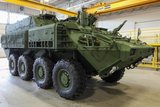
General Dynamics Land Systems-Canada is the country’s first strategic partner under the Defence Industrial Strategy’s Strategic Partnership Framework, an effort to provide companies with confidence to invest and boost the defence labour force.
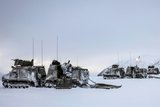
The UK’s Minister for the Armed Forces Louise Sandher-Jones made her first appearance in the role before the House of Commons Defence Committee this week to highlight efforts to improve capability in the High North.
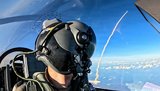
Ottawa explores expanding defence-industrial cooperation with Washington into sensitive programmes, an approach that could reshape NORAD modernisation, strengthen North American supply chains and create new opportunities for defence contractors.

Connect with us on socials


