


From systems integrator to multi-domain solutions provider (video)
Philipp von Brandenstein, Head of Corporate Communications at Rheinmetall, explains how Eurosatory 2026 marked a new stage in the company's evolution.


GOL has selected Rockwell Collins to provide CMU-900 Communications Management Units (CMU) for its fleet of Boeing 737NGs, which will also be equipped with the company’s GLU-925 Multi Mode Receiver (MMR).
“GOL’s standards of safety, comfort and affordability for their passengers, as well as the need to equip their fleet for an evolving future airspace were, key factors in selecting Rockwell Collins for datalink and MMR capabilities,” remarked Jeff Standerski, vice-president and general manager of Air Transport Systems for Rockwell Collins. “These are smart investments that will provide operators the advanced functionality and proven technology that will help GOL’s fleet perform at its best now and for years to come.”
The CMU-900 enables state-of-the-art digital communications between aircraft systems, pilots, airlines IT infrastructure, and various operations control functions. This enhances an airline’s ability to more effectively communicate and manage airline operations.
The CMU-900 also will be certified in January 2011 for the European Link 2000+ Protected Mode ATN CPDLC mandate which begins in January 2011. The CMU-900 was the first communications management unit to participate in the European Link 2000+ Controller to Pilot Datalink Communications (CPDLC) trials, which validated the use of advanced digital communications for Air Traffic Control communications.
The GLU-925 Multi-Mode Receiver is the first MMR certified for precision landing using either Global Navigation Satellite Systems (GNSS) or Instrument Landing Systems (ILS). The GLU-925 is the primary navigation sensor for all phases of flight, including the stringent Required Navigation Performance (RNP) requirement of 0.1 nautical mile.


Philipp von Brandenstein, Head of Corporate Communications at Rheinmetall, explains how Eurosatory 2026 marked a new stage in the company's evolution.

The US Department of Defense has requested new contracting authorities from Congress, using the Army's MV-75 Cheyenne programme to demonstrate how competition, digital engineering and closer industry collaboration could accelerate acquisitions.

The US government plans to accelerate production even further after achieving key B61-13 milestones months ahead of schedule, as the programme advances amid growing US-China strategic competition.
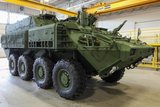
General Dynamics Land Systems-Canada is the country’s first strategic partner under the Defence Industrial Strategy’s Strategic Partnership Framework, an effort to provide companies with confidence to invest and boost the defence labour force.

The UK’s Minister for the Armed Forces Louise Sandher-Jones made her first appearance in the role before the House of Commons Defence Committee this week to highlight efforts to improve capability in the High North.
Ottawa explores expanding defence-industrial cooperation with Washington into sensitive programmes, an approach that could reshape NORAD modernisation, strengthen North American supply chains and create new opportunities for defence contractors.

Connect with us on socials


