


From systems integrator to multi-domain solutions provider (video)
Philipp von Brandenstein, Head of Corporate Communications at Rheinmetall, explains how Eurosatory 2026 marked a new stage in the company's evolution.


Fokker Services has signed an Abacus component repair service agreement with South African Express in support of the carrier’s seven Bombardier Q300s.
Under the two-year contract, plus option to extend for another three years, Fokker Services will provide repair and overhaul services for SA Express at fixed cost and within a guaranteed turn around time.
Abacus, the component availability programme of Fokker Services, offers guaranteed availability of serviceable components and customised component repair and overhaul services. Currently Fokker Services supports over 200 aircraft with 30 operators in various configurations of which five are Dash 8/Q Series operators with 34 aircraft.
SA Express operates an all Bombardier fleet of 12 CRJ200s, two CRJ700s, two Q400s and the seven Q300s covered by this agreement.
Ramon Vahed, general manager technical aircraft maintenance and engineering of SA Express, commented, ‘’We trust that this Abacus component agreement will result in lower inventory cost and improved service levels. We have been working with Fokker Services over the past year to develop this agreement and are convinced that it will add value to our operations. The experience of Fokker Services in supporting out of production aircraft is an asset for the industry.”
The photo shows Ramon Vahed (SA Express) and Erik Geertsema (Fokker Services) signing the agreement at the Air Africa 2010 conference, in Johannesburg,


Philipp von Brandenstein, Head of Corporate Communications at Rheinmetall, explains how Eurosatory 2026 marked a new stage in the company's evolution.

The US Department of Defense has requested new contracting authorities from Congress, using the Army's MV-75 Cheyenne programme to demonstrate how competition, digital engineering and closer industry collaboration could accelerate acquisitions.
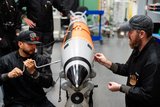
The US government plans to accelerate production even further after achieving key B61-13 milestones months ahead of schedule, as the programme advances amid growing US-China strategic competition.

General Dynamics Land Systems-Canada is the country’s first strategic partner under the Defence Industrial Strategy’s Strategic Partnership Framework, an effort to provide companies with confidence to invest and boost the defence labour force.

The UK’s Minister for the Armed Forces Louise Sandher-Jones made her first appearance in the role before the House of Commons Defence Committee this week to highlight efforts to improve capability in the High North.
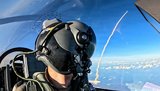
Ottawa explores expanding defence-industrial cooperation with Washington into sensitive programmes, an approach that could reshape NORAD modernisation, strengthen North American supply chains and create new opportunities for defence contractors.

Connect with us on socials


